
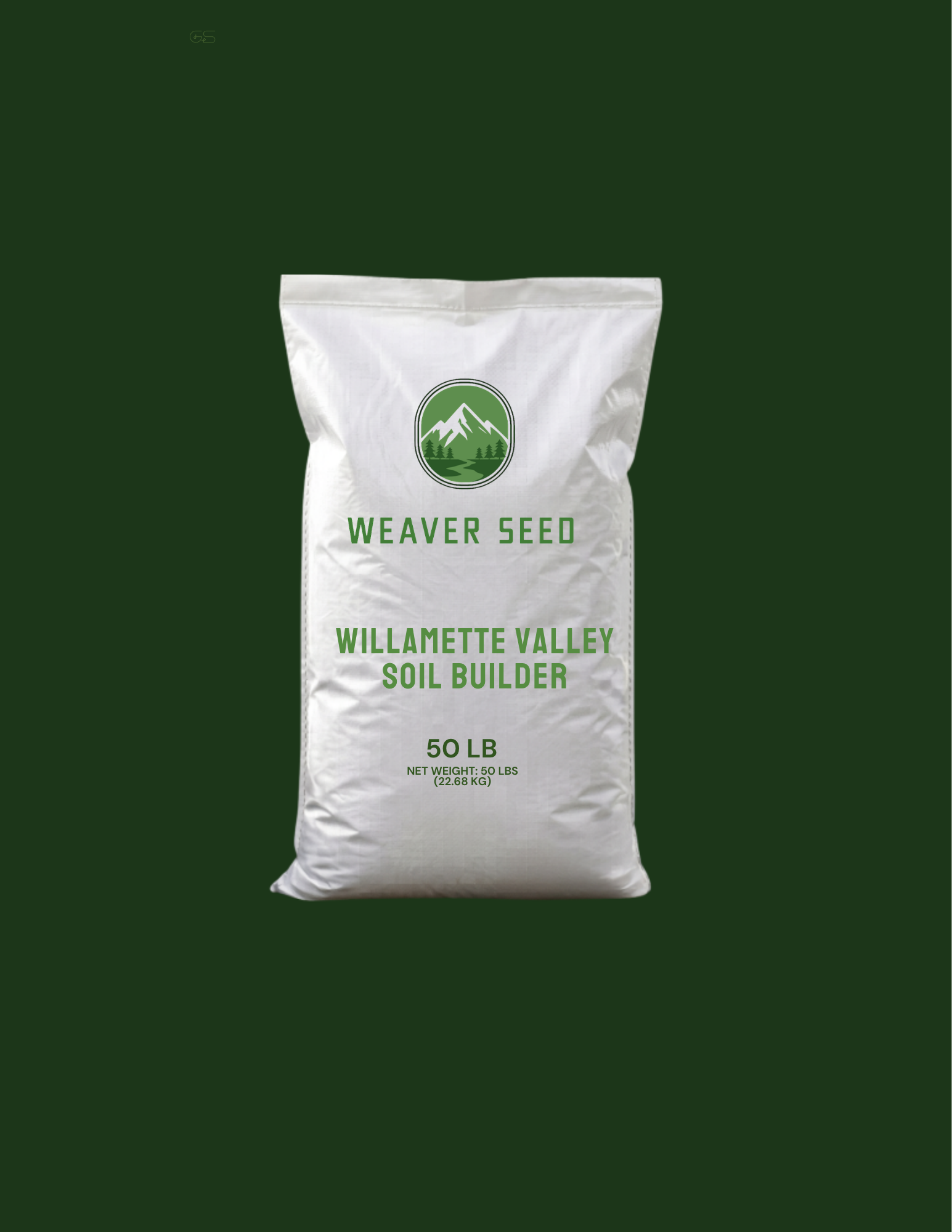
Oregon Cover Crop Seed Mix
Willamette Valley Soil Builder
A Brassica-Free Multi-Species Cover Crop Mix Developed for Western Oregon Agriculture
Willamette Valley Soil Builder combines winter legumes, triticale, crimson clover and phacelia in a diverse cool-season cover crop blend designed for biomass, biological nitrogen fixation, nutrient cycling, living soil cover and multiple rooting characteristics.
Designed for: Willamette Valley farms, hazelnut orchards, vineyards, orchard row middles, field-crop rotations and growers looking for a soil-building cover crop without brassicas.
Willamette Valley Cover Crop Mix
Soil-Building Diversity Without Brassicas
Willamette Valley Soil Builder was developed as a western Oregon alternative to Weaver Seed's standard WS Soil Builder. Instead of relying on mustard, radish and canola, this formulation uses a combination of cereal grain, large-seeded legumes, crimson clover and phacelia.
The result is a brassica-free cover crop mix with complementary plant types that can provide seasonal ground cover, biomass, nutrient capture, biological nitrogen fixation and a range of above- and below-ground growth characteristics.
What's in the Mix
Willamette Valley Soil Builder Mix Components
Five cool-season species combine cereal, legume and flowering broadleaf functions in one Oregon cover crop formulation.
Bell / Fava Beans
Large-seeded winter legumes included for vigorous biomass production and biological nitrogen fixation when successfully inoculated and nodulated.
Forerunner Triticale
Cool-season cereal providing fibrous rooting, vegetative cover, biomass and nutrient capture within the mixture.
Frostmaster Winter Peas
Winter pea component contributing seasonal growth, nitrogen-fixation potential and nitrogen-rich residue following successful establishment.
Crimson Clover
Annual clover adding another legume growth habit, biological nitrogen-fixation potential and flowering value later in the season.
Lacy Phacelia
Fast-growing flowering broadleaf that increases plant diversity and can provide useful floral resources for pollinating and beneficial insects.
Agronomic Functions
Multiple Soil-Building Functions in One Mix
The formulation combines species with different growth habits rather than asking one cover crop species to perform every job.
Biomass Production
Triticale, winter peas and fava beans provide substantial seasonal vegetative growth and plant residue within the mixture.
Biological Nitrogen Fixation
Fava beans, winter peas and crimson clover are legumes capable of fixing atmospheric nitrogen when compatible rhizobia and successful nodulation are present.
Rooting Diversity
Cereal, pea, bean, clover and phacelia growth habits create greater rooting diversity than planting a single cover crop species alone.
Nutrient Capture
Actively growing cover crops take up available nutrients during the growing season and retain them in living plant biomass.
Living Soil Cover
Establishing vegetation during an otherwise open period keeps more soil covered and maintains actively growing roots in the field.
Flowering Habitat
Phacelia and crimson clover add flowering components that can provide floral resources when allowed to reach bloom.
Western Oregon Agriculture
Built Around the Willamette Valley
Willamette Valley Soil Builder is intended for cool-season cover crop programs in western Oregon, where fall and winter rainfall can support substantial cool-season cover crop growth.
Crop, soil, drainage, planting date, available moisture and termination timing still matter. A regional name does not mean every field in the Willamette Valley should be planted the same way.
Why Doesn't This Mix Contain Brassicas?
Unlike the standard WS Soil Builder, the Willamette Valley formulation contains no mustard, radish or canola. Its functional diversity comes from triticale, winter peas, fava beans, crimson clover and phacelia instead.
This makes it an option for growers specifically looking for a multi-species soil-building cover crop without brassica species while still retaining cereal, legume and flowering components.
Establishment
Planting Willamette Valley Soil Builder
Establishment should be adjusted around the field, crop, planting equipment and expected moisture rather than treating a single planting method as universal.
Seeding Rate
Recommended general seeding rate is 100–120 lb per acre. Actual rates may be adjusted for planting method, seedbed conditions and management objectives.
Seed-to-Soil Contact
Good establishment depends on appropriate seed placement and adequate seed-to-soil contact. Avoid leaving the large-seeded components exposed on a loose soil surface.
Manage Around the Crop
Planting date, available moisture, orchard or crop requirements, desired biomass and termination timing should all be considered when managing the stand.
More Cover Crop Resources
Compare Oregon Cover Crop Options
Explore additional Weaver Seed mixes, individual species and custom cover crop tools.
Cover Crop Seed & Mixes
Browse Weaver Seed cover crop mixtures and individual cover crop species for western agriculture.
Explore Cover Crops →Custom Mix Calculator
Compare species, calculate pounds per acre and evaluate a custom formulation around your planting objectives.
Build a Custom Mix →Talk With Weaver Seed
Tell us your location, crop, acreage and cover crop goals for current availability and regional product guidance.
Contact Weaver Seed →Frequently Asked Questions
Willamette Valley Cover Crop Questions
What is in the Willamette Valley Soil Builder mix?
The mix contains Bell/Fava Beans, Forerunner Triticale, Frostmaster Winter Peas, Crimson Clover and Lacy Phacelia.
Does Willamette Valley Soil Builder contain brassicas?
No. This formulation contains no mustard, radish, canola or other brassica components. It was developed as a brassica-free soil-building mixture for western Oregon.
What is the seeding rate for Willamette Valley Soil Builder?
The general recommended seeding rate is 100–120 pounds per acre. Rate and establishment method may be adjusted around planting equipment, seedbed conditions and field objectives.
Can this cover crop mix be used in Oregon hazelnut orchards?
It can be considered for managed hazelnut orchard row middles where seasonal soil cover, biomass and a cereal-legume mixture fit the orchard's water, traffic and management program. Site conditions and management should determine final product selection.
Is this the same as WS Soil Builder?
No. The standard WS Soil Builder includes brassica components. Willamette Valley Soil Builder uses a brassica-free combination of cereal, legumes, crimson clover and phacelia.
Looking for Cover Crop Seed in Oregon?
Contact Weaver Seed for Willamette Valley Soil Builder availability, pricing, quantities or help comparing cover crop options for your Oregon farm, orchard, vineyard or field-crop program.
Request Availability & Pricing