
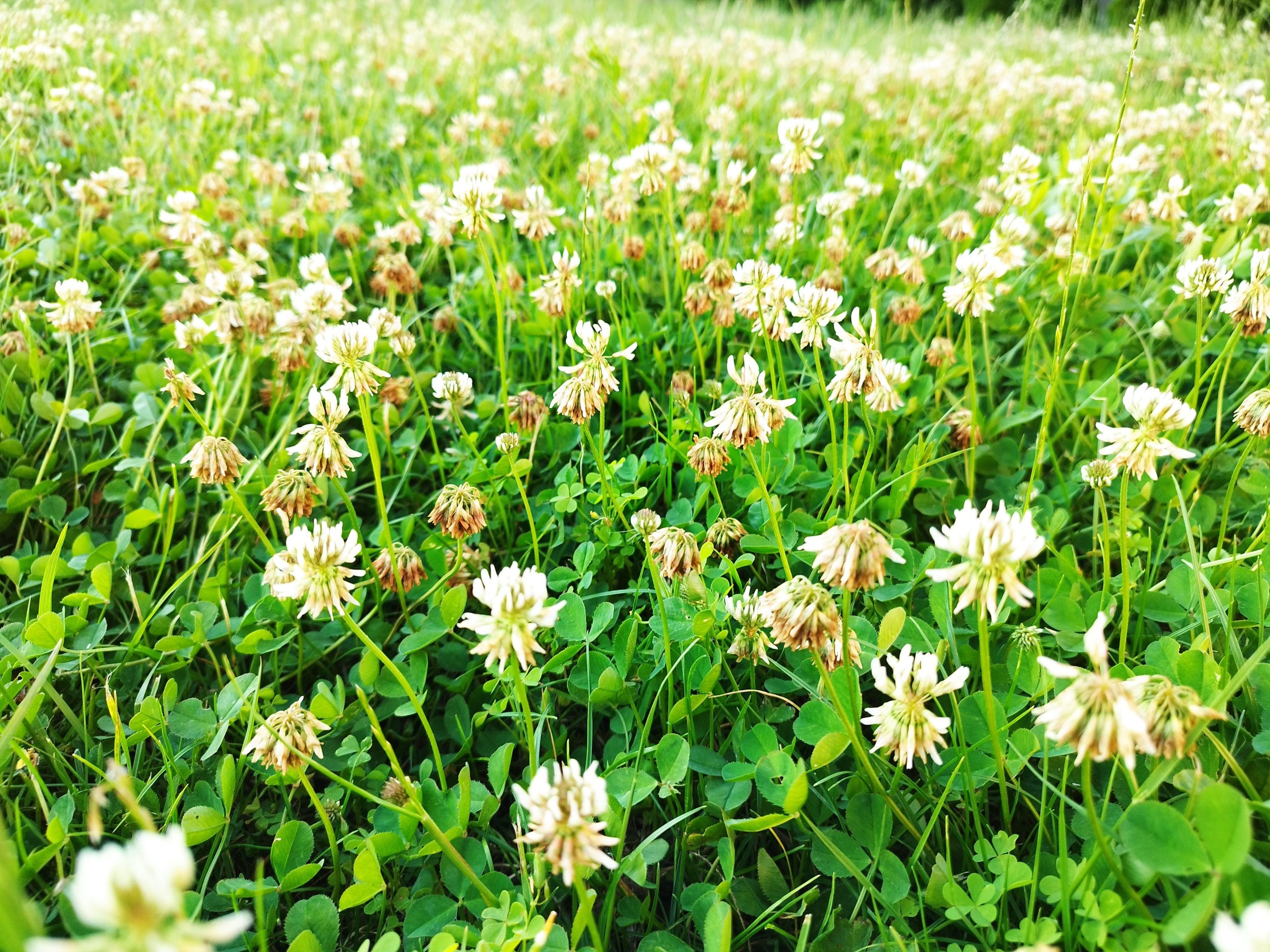
White Clover
White clover is a low-growing perennial legume used in pasture, cover crop, orchard, vineyard and pollinator plantings. It can contribute biological nitrogen fixation, flowering resources, living ground cover and forage value when establishment and management conditions are suitable.
Low-Growing Clover With Multiple Agricultural Uses
White clover can fit systems where growers want a perennial legume that contributes flowering habitat, forage, living ground cover and nitrogen-fixing potential without the height of many larger annual cover crop species.
Biological Nitrogen Fixation
White clover can fix atmospheric nitrogen when successfully established with compatible rhizobia and active root nodulation.
Pollinator Resource
When allowed to flower, white clover can provide floral resources for bees and other pollinating insects within agricultural and habitat plantings.
Low-Growing Cover
Its relatively low growth habit can make white clover useful in managed orchard, vineyard and landscape systems where a shorter living cover is preferred.
Forage Value
White clover is widely used as a legume component in pasture systems and can contribute palatable forage when maintained as part of a balanced stand.
Persistent Growth Habit
As a perennial clover, established plants can persist beyond a single growing season where moisture, fertility and management support continued growth.
Mix Compatibility
White clover can be combined with grasses and other species in pasture, cover crop and habitat blends where a lower growing perennial legume is desired.
Seeding Rate Note: A typical full-stand cover crop reference is approximately 5–7 lb/acre. Lower rates are commonly used when white clover is overseeded into an existing grass pasture or included as one component of a multi-species mixture. Final rate should be adjusted for seed form, planting method, variety, site conditions and intended use.
A Useful Legume for Managed Living-Cover Systems
White clover is especially useful where growers want a relatively low-growing legume that can remain productive under managed conditions while contributing forage, flowering habitat and nitrogen-fixing potential.
Establishment: White clover seed is small and should be planted shallow into a firm seedbed with good seed-to-soil contact. Avoid excessive planting depth. Adequate establishment moisture is important, especially where rainfall is unreliable.
Inoculation: Use compatible clover rhizobia when needed to support effective nodulation and biological nitrogen fixation. Seed form and inoculation status can vary by lot, so confirm the available product before planting.
OMRI-Listed Coating Option: Selected conventional white clover seed may be available with an OMRI-Listed inoculant coating. An OMRI-Listed coating does not make conventional seed certified organic. Organic operations should confirm current seed status and requirements with their certifier before planting.
Variety Availability: White clover varieties and seed forms can vary by lot and season. Contact Weaver Seed for current variety, coating and availability information.
Looking for White Clover Seed?
Contact Weaver Seed for current White Clover varieties, seed form, OMRI-Listed coating availability, pricing or help incorporating white clover into a pasture, cover crop or pollinator seed program.
Request Pricing