
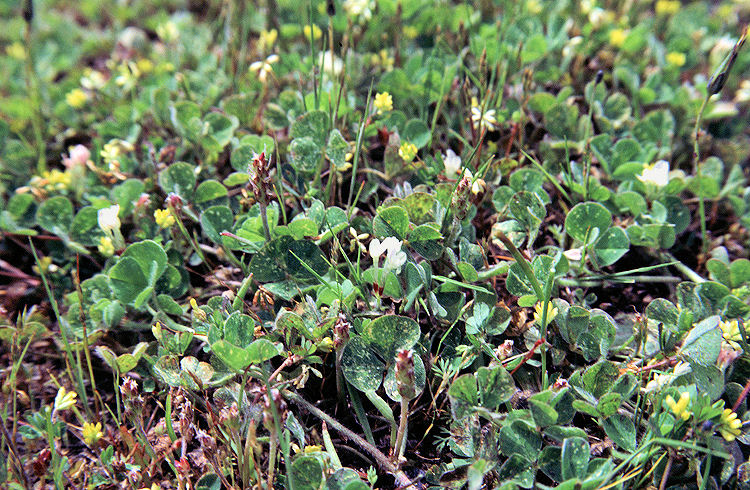
Dalkeith Sub Clover
Dalkeith Sub Clover (Trifolium subterraneum) is an early-maturing subterranean clover developed for lower-rainfall Mediterranean-type environments. Its low-growing habit, hard seed and ability to regenerate from a soil seedbank make it useful in pasture, grazing and annual self-reseeding legume systems.
Why Plant Dalkeith Sub Clover?
Dalkeith combines early maturity with hard seed production and a low-growing pasture habit, making it particularly useful where dependable regeneration is desired under shorter growing seasons.
Early Maturity
Dalkeith matures relatively early, allowing it to complete its life cycle in areas with shorter spring moisture periods.
Self-Reseeding Potential
Subterranean clover buries developing seed close to the soil surface, helping create a seed reserve capable of supporting future stands.
Hard Seed
A portion of the seed remains dormant after maturity, helping spread germination across multiple seasons.
Nitrogen Fixation
When properly inoculated and nodulated, Dalkeith can biologically fix atmospheric nitrogen as part of a pasture or cover crop system.
Grazing Tolerance
Its low, semi-prostrate growth habit makes Dalkeith compatible with managed grazing once the stand has become established.
Low-Rainfall Adaptation
Early maturity makes Dalkeith particularly useful in Mediterranean environments where the growing season ends relatively early.
An Early-Maturing Sub Clover
Dalkeith is generally considered an early subterranean clover. Its combination of early growth, early maturity and hard seed makes it particularly useful where pasture persistence must be maintained through a soil seedbank under relatively short growing seasons.
Planting Dalkeith Sub Clover
A practical straight-stand seeding rate is approximately 10–12 lb per acre.
Keep seed shallow at approximately ¼ inch deep. A firm seedbed and good seed-to-soil contact help support uniform establishment.
Fall planting is generally preferred in Mediterranean-type climates so seedlings can establish with cool-season rainfall and develop through winter and spring.
Mixture Rate: When Dalkeith is included with grasses or other legumes, reduce the component rate based on the desired percentage of clover in the finished stand.
Best Uses for Dalkeith Sub Clover
Grazed Pasture
Adds a low-growing legume component to compatible pasture systems managed for grazing.
Range Improvement
Can be used to introduce a self-regenerating annual legume into suitable Mediterranean-type range systems.
Orchard & Vineyard Cover
Subterranean clovers can provide low-growing winter cover in compatible orchard and vineyard floor systems.
Grass-Legume Mixtures
Can be combined with compatible annual grasses to add legume diversity, forage quality and nitrogen fixation.
Manage the First Year for Future Stands
Sub Clover persistence depends heavily on establishment, flowering and successful seed production. First-year management should protect the stand long enough to build a viable soil seed reserve.
Protect Seedlings
Avoid heavy grazing while plants are small and still developing their root systems.
Use Managed Pressure
Once established, Dalkeith can tolerate grazing, but grazing intensity should still support plant vigor and future seed production.
Allow Regeneration
Where long-term self-reseeding is the goal, allow enough plants to flower and produce mature seed each season.
Avoid Waterlogged Sites
Dalkeith is better suited to moderately well-drained soils than sites that remain saturated for prolonged periods.
Variety Selection: Dalkeith is primarily an early-maturing, lower-rainfall subterranean clover. Areas with longer growing seasons, high rainfall or waterlogged soils may be better matched to a different sub clover cultivar.
Looking for Dalkeith Sub Clover Seed?
Contact Weaver Seed for current Dalkeith availability, quantities, pricing or help selecting the right Sub Clover for your pasture, range or cover crop program.
Request Pricing