
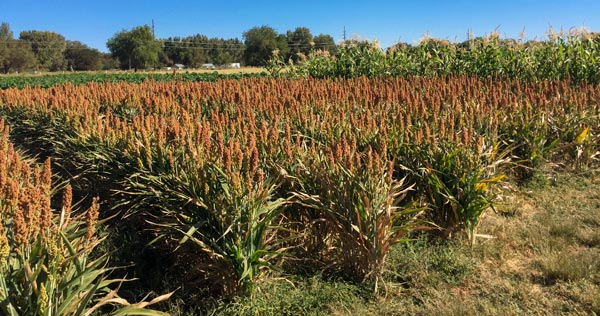
Sorghum-Sudangrass
Sorghum-Sudangrass is a vigorous warm-season annual grass used for summer forage, grazing, biomass production and cover crop applications. Under warm temperatures and adequate moisture, it can produce substantial vegetative growth and rapidly cover open ground.
Why Plant Sorghum-Sudangrass?
Sorghum-Sudangrass is especially useful when rapid summer growth, forage production and high levels of plant biomass are desired.
High Biomass
Rapid warm-season growth can produce substantial above-ground biomass under favorable conditions.
Summer Forage
Provides warm-season forage during periods when cool-season pasture grasses may experience a summer slump.
Rapid Groundcover
Vigorous growth can quickly develop canopy cover and help protect exposed soil.
Weed Competition
Dense summer growth can compete strongly with weeds when the stand establishes successfully.
Fibrous Rooting
A vigorous fibrous root system contributes living roots and soil structure during the growing season.
Cover Crop Flexibility
Can be planted alone or combined with compatible warm-season broadleaf and legume cover crop species.
Planting Sorghum-Sudangrass
Weaver Seed's current working rate is approximately 30 lb per acre when drilled and 35 lb per acre when broadcast.
Plant after soils have warmed and conditions support active warm-season growth. Place seed approximately 1 to 1.5 inches deep, adjusting for soil texture and available moisture.
When used as one component of a multi-species cover crop, reduce the Sorghum-Sudangrass rate appropriately.
Rate Note: Seeding rate can vary by hybrid, seed size, field use, irrigation, planting equipment and forage objective.
Best Uses for Sorghum-Sudangrass
Summer Grazing
Can provide productive warm-season grazing when livestock safety requirements are carefully followed.
Forage Production
Suitable for warm-season forage systems where rapid vegetative growth is desired.
Summer Cover Crops
High biomass and rapid canopy development make it useful in warm-season cover crop programs.
Biomass & Soil Cover
Can create substantial residue and vegetative cover when grown under productive summer conditions.
Prussic Acid & Nitrate Management Matters
Use Extra Care Before Grazing or Feeding
Sorghum-family forages can present prussic-acid and nitrate risks to livestock. Risk can increase when plants are stressed by drought, frost, rapid regrowth or other adverse conditions.
Avoid grazing young or recently frosted growth, and evaluate stressed forage before allowing livestock access. Nitrate risk may also increase under drought stress or high nitrogen fertility.
Grazing and harvest decisions should follow current livestock safety recommendations for the specific field and conditions.
Manage for Regrowth, Forage & Safety
Plant Into Warm Soil
Wait until soils are warm enough to support rapid germination and warm-season growth.
Support Establishment
Adequate soil moisture during germination improves establishment and early biomass production.
Follow Safety Guidelines
Manage plant height, stress conditions, frost events and regrowth carefully before livestock access.
Terminate Before Seed Set
In cover crop systems, terminate before mature seed development where volunteer plants are undesirable.
Looking for Sorghum-Sudangrass Seed?
Contact Weaver Seed for current Sorghum-Sudangrass availability, quantities, pricing or help selecting a warm-season forage or cover crop option.
Request Pricing