
Annual Wildflower
Shirley Poppy
Papaver rhoeas — Shirley Group
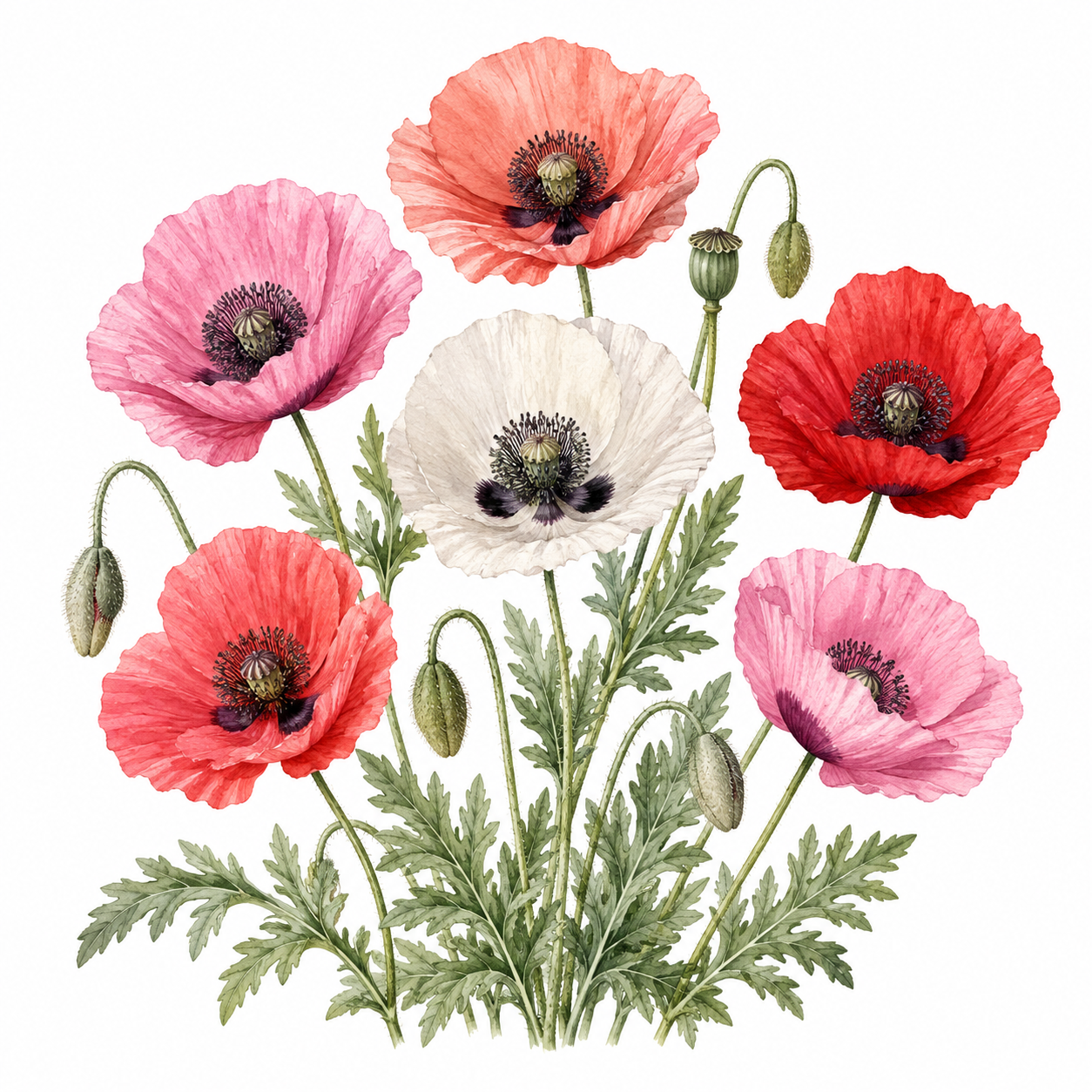
A graceful annual poppy with delicate crepe-like flowers in soft pink, coral, white, red and blended shades
Shirley Poppy is a cultivated group of the classic Corn Poppy, Papaver rhoeas, selected for its broad range of delicate flower colors. Slender stems carry silky, crepe-like blooms in shades of pink, coral, white and red, including attractive bicolored forms. The plants create an airy seasonal display and work especially well in annual wildflower mixtures, meadow-style plantings and informal flower gardens.
Wildflower Characteristics
Why Plant Shirley Poppy?
Shirley Poppy combines the classic field-poppy form with a softer and more diverse range of flower colors.
Beautiful Color Range
Flowers occur in shades of pink, coral, white and red, along with blended and bicolored forms.
Crepe-Like Flowers
Thin, lightly textured petals give each bloom the delicate crepe-paper appearance characteristic of Papaver rhoeas.
Pollinator Interest
Open poppy flowers provide accessible pollen and add another flowering component to diversified pollinator plantings.
Airy Growth Habit
Flowers are held individually above the foliage on slender stems, creating movement and a light, natural meadow appearance.
Where It Fits
Best Uses for Shirley Poppy
Shirley Poppy is especially effective where soft annual color and an informal meadow-style appearance are desired.
Establishment & Management
Growing Shirley Poppy
Shirley Poppy establishes best by direct seeding because poppies develop sensitive root systems and generally do not respond well to transplanting.
Direct Seeding
Sow seed directly into the final planting area. Poppies generally perform better when allowed to establish without transplanting.
Planting Depth
Poppy seed is extremely small. Broadcast onto a prepared seedbed and lightly press or rake the seed into the surface rather than burying it deeply.
Sun & Soil
Choose a sunny location with reasonably well-drained soil. Avoid persistently saturated planting sites.
Natural Reseeding
Allow mature seed capsules to develop where natural reseeding is desired. Cutting or mowing before seed maturity will reduce volunteer plants the following season.
A Classic Poppy Selection
The Corn Poppy in a Softer Color Palette
Shirley Poppies retain the delicate flower structure and graceful stems of Papaver rhoeas while expanding the traditional scarlet-red color palette into softer pink, coral and white shades. This makes them especially useful in mixed wildflower plantings where a more varied and refined poppy display is desired.
Looking for Shirley Poppy Seed?
Contact Weaver Seed for current availability, quantities, packaging or help incorporating Shirley Poppy into an annual wildflower, pollinator or custom seed mixture.
Contact Weaver Seed