
Perennial Flower
Shasta Daisy
Leucanthemum × superbum
A dependable clump-forming perennial with classic white daisies, bright yellow centers and strong upright stems
Shasta Daisy is a classic flowering perennial known for large white daisy-like blooms surrounding bright yellow central discs. Plants form upright clumps of dark green, toothed foliage and produce sturdy flowering stems through the summer season. Its clean white flowers, perennial growth habit and strong cut-flower performance make Shasta Daisy useful in perennial wildflower plantings, pollinator gardens, borders and naturalized landscape areas.
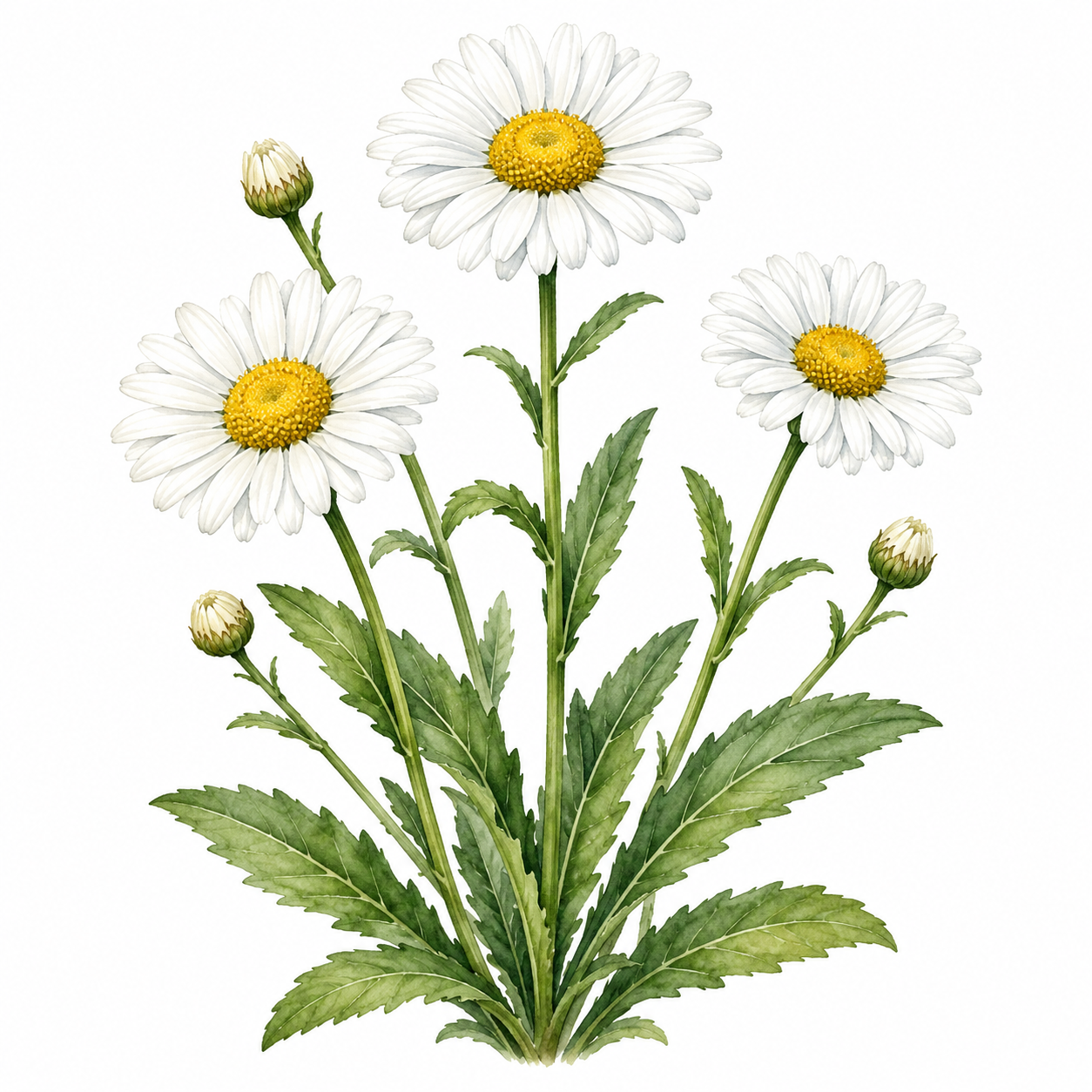
Flower Characteristics
Why Plant Shasta Daisy?
Shasta Daisy combines perennial persistence, recognizable summer flowers and strong landscape and cut-flower performance.
Perennial Growth
Plants form persistent clumps and can return for multiple seasons when established in a suitable site.
Classic White Flowers
Bright white ray flowers surrounding a golden-yellow center produce the familiar Shasta Daisy appearance.
Pollinator Interest
Open flower heads are attractive to bees, butterflies and other visiting pollinating insects during bloom.
Cut-Flower Value
Strong upright stems and recognizable white blooms make Shasta Daisy useful for seasonal bouquets and cutting gardens.
Where It Fits
Best Uses for Shasta Daisy
Shasta Daisy is particularly effective where a persistent flowering perennial with strong summer color and classic daisy form is desired.
Establishment & Management
Growing Shasta Daisy
Shasta Daisy performs best in sunny locations with reasonably fertile, well-drained soil and adequate moisture during establishment.
Sunlight
Full sun generally produces the strongest flowering. Plants can tolerate some partial shade, but flowering may be reduced where light is limited.
Soil & Drainage
Use average to moderately fertile, well-drained soil. Avoid sites that remain persistently saturated, especially during cool weather.
Perennial Establishment
Maintain adequate moisture while seedlings and young plants establish. Once mature, plants form sturdy clumps that can persist for multiple seasons.
Flower Management
Removing spent blooms can encourage additional flowering and maintain a cleaner planting. Established clumps can also be divided periodically when they become crowded.
Classic Perennial
California Name — But Not a California Native
Although the name Shasta Daisy refers to California's Mount Shasta region, Leucanthemum × superbum is a horticultural hybrid rather than a California native wildflower. It was developed near Mount Shasta in the late nineteenth century and became a widely grown perennial because of its large white flowers, upright growth and dependable garden performance.
Looking for Shasta Daisy Seed?
Contact Weaver Seed for current availability, quantities, packaging or help incorporating Shasta Daisy into a perennial wildflower, pollinator or custom seed mixture.
Contact Weaver Seed