
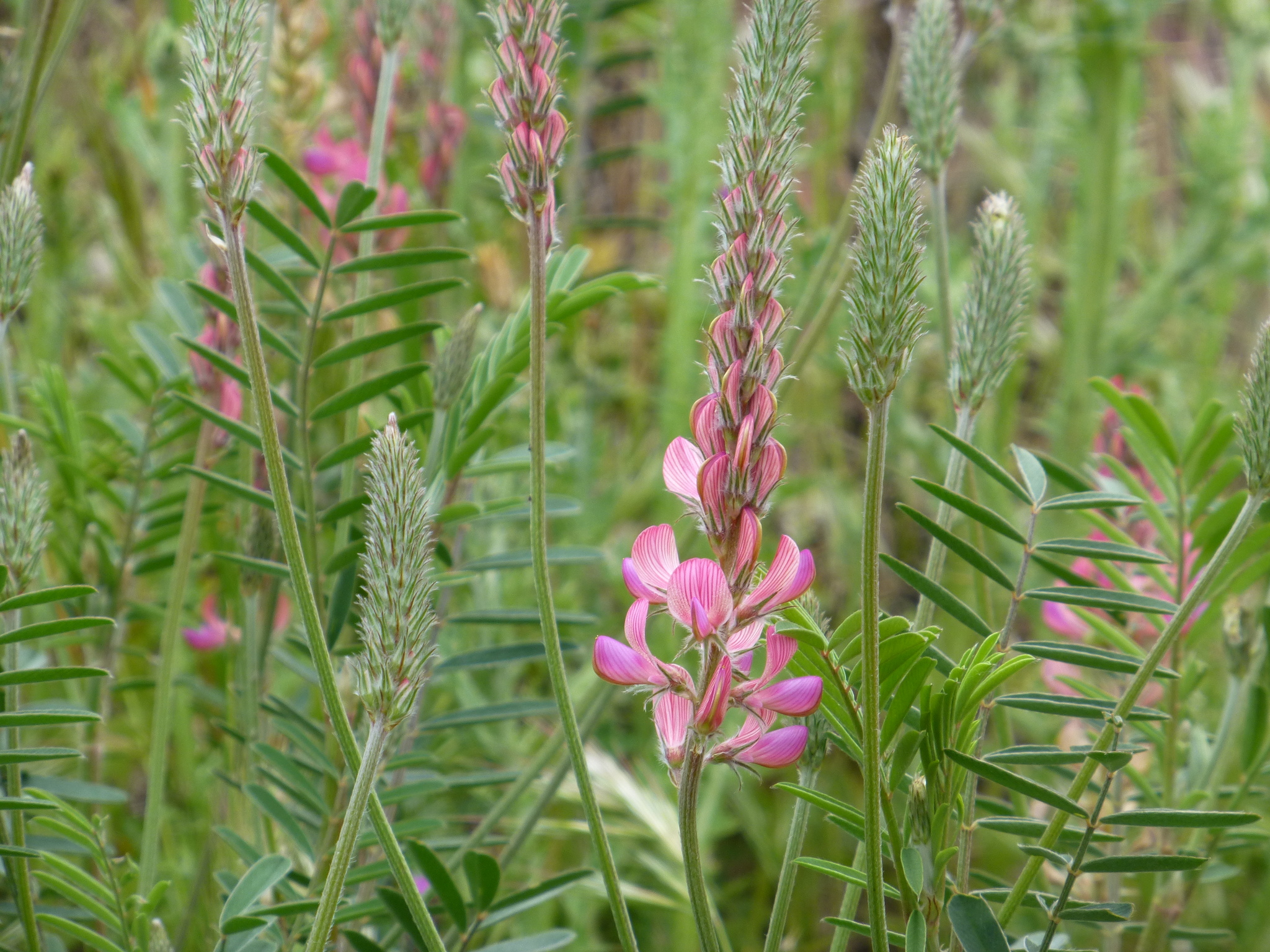
Sainfoin
Sainfoin (Onobrychis viciifolia) is a perennial forage legume known for palatable forage, pink flower spikes and its non-bloating grazing characteristic. It is used in pasture, hay, range and pollinator systems where well-drained soils and appropriate management provide a good fit.
Why Plant Sainfoin?
Sainfoin provides a distinctive combination of perennial forage production, grazing value, flowering habitat and legume function.
Non-Bloating Forage
Sainfoin is particularly valuable where a high-quality forage legume is desired without the same bloat concern associated with some other forage legumes.
Perennial Growth
Once established, sainfoin can provide multi-year forage production under suitable soil, moisture and management conditions.
Pollinator Value
Its showy pink flower spikes provide a strong flowering resource when stands are allowed to reach bloom.
Deep Root System
Sainfoin develops a substantial root system that helps it use deeper soil moisture where soils are deep and well drained.
Hay & Pasture
Can be managed for hay, pasture or mixed forage systems depending on the variety, site and production objective.
Western Forage Fit
Sainfoin has a long history of use in the Intermountain West and other semi-arid forage environments when soils and rainfall are appropriate.
Planting Sainfoin
Sainfoin should be planted into a firm, clean seedbed with good seed-to-soil contact. Keep planting depth shallow, generally no deeper than about 3/4 inch.
Sainfoin seed should be inoculated with the appropriate sainfoin-specific Rhizobium prior to planting when the seed is not already properly inoculated.
Seeding rate varies with seed form, pod status, row spacing, dryland versus irrigated production and whether sainfoin is planted alone or in a mixture.
Seeding Rate Note: Published Western guidance varies by seed form and production system. Confirm the current Weaver Seed lot and intended use before finalizing the planting rate.
Best Uses for Sainfoin
Rotational Pasture
Well suited to managed grazing systems where grazing periods are followed by adequate recovery.
Hay Production
Can be used as a perennial hay legume where soil, moisture and harvest management support persistence.
Pollinator Plantings
Pink flowers provide valuable bloom when stands are allowed to reach flowering before harvest or grazing.
Range & Forage Mixes
Can be included as a legume component in compatible range or pasture mixtures when competition from aggressive companion grasses is controlled.
Protect the Stand During Establishment
Sainfoin can be productive and persistent, but establishment and crown protection are important. Avoid wet soils, excessive traffic and close continuous grazing.
Avoid Wet Sites
Sainfoin performs poorly on waterlogged soils and sites with persistently high water tables.
Control Weeds Early
Start with a firm, weed-free seedbed because sainfoin seedlings can be vulnerable to early competition.
Use Rotation
Rotational grazing is preferred over repeated close or continuous grazing because crowns can be damaged by heavy grazing pressure and trampling.
Allow Recovery
Allow adequate regrowth and periodically permit flowering or seed production when stand persistence is a priority.
Site Fit Note: Sainfoin generally performs best on deep, well-drained soils and is less suited to wet, saline or strongly acidic sites. Local adaptation, variety and management should be reviewed before planting.
Looking for Sainfoin Seed?
Contact Weaver Seed for current sainfoin availability, seeding-rate guidance, quantities or help determining whether sainfoin fits your pasture, hay or pollinator program.
Request Pricing