
Rose Clover
A hardy cool-season annual clover valued for dryland range, pasture improvement, erosion control and cover crop systems. Rose Clover combines nitrogen-fixing legume growth with broad soil adaptation, good drought tolerance and dependable reseeding potential.
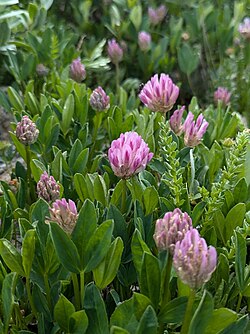
Dependable Annual Clover for Dryland Systems
Rose Clover is a semi-upright annual legume with a long history of use in California range, pasture and conservation plantings. It is particularly valuable where seasonal rainfall, lower fertility or dryland conditions make establishment challenging for more demanding legumes.
Rose Clover produces pink to rose-colored flowers during spring and develops hard seed that can remain in the soil and germinate during future favorable seasons.
When effectively inoculated and successfully nodulated, Rose Clover can biologically fix atmospheric nitrogen while adding broadleaf diversity to grass-dominated stands.
Why Rose Clover?
Rose Clover's strongest advantage is not maximum biomass. Its real strength is persistence in comparatively difficult environments where dryland adaptation and dependable reseeding are valuable.
That makes it especially useful for annual rangeland, erosion-control plantings and lower-input systems.
What Rose Clover Brings to the Stand
Nitrogen Fixation
When properly inoculated and successfully nodulated, Rose Clover can biologically fix atmospheric nitrogen within the soil-plant system.
Drought Tolerance
Rose Clover has useful drought tolerance and is well suited to Mediterranean-climate systems dependent on seasonal rainfall.
Hard-Seed Reseeding
Hard seed can persist between seasons and contribute to natural regeneration when plants are allowed to produce mature seed.
Broad Soil Adaptation
Rose Clover can perform across a relatively broad range of soil conditions compared with many more demanding annual legumes.
Dryland Forage
Adds an annual legume component to compatible range and pasture systems and can provide useful dry-season forage.
Flowering Diversity
Spring flowers provide additional floral diversity and may provide resources for pollinators and beneficial insects.
Where Rose Clover Fits
Dryland Range
A strong annual legume option for California range improvement where seasonal rainfall drives production.
Erosion Control
Adds low-growing broadleaf cover and nitrogen-fixing capability to grass-based erosion-control mixtures.
Pasture Improvement
Introduces annual legume diversity into compatible grass-dominated pasture and range systems.
Cover Crop Mixes
Useful where growers want a relatively hardy annual clover with strong reseeding potential.
Rose Clover Planting Information
Rose Clover has relatively small seed and should be established shallowly with good seed-to-soil contact. Fall planting allows the crop to use seasonal winter and spring moisture.
Seeding rates are general guidelines for pure stands. Rates should be adjusted for seed quality, planting method, field conditions, rainfall expectations and whether Rose Clover is planted alone or as part of a mixture. Avoid unnecessarily deep planting of small clover seed.
One of Rose Clover's most useful traits is the production of hard seed. A portion of mature seed can remain dormant and germinate in later favorable seasons.
This gives Rose Clover particular value in annual rangeland and other systems designed around natural reseeding. Where volunteers are undesirable, termination should occur before mature seed production.
Strong Fit for Dryland Grass & Clover Mixes
Rose Clover is especially useful in diversified annual range and erosion-control mixtures where grasses provide fibrous rooting and other legumes broaden seasonal performance.
Blando Brome
Adds a reseeding annual grass component and fibrous rooting for dryland and erosion-control applications.
Annual Ryegrass
Provides relatively rapid grass establishment and substantial fibrous root growth.
Subclover
Adds another reseeding annual legume with different maturity and soil-adaptation characteristics.
Persian Clover
Adds another annual clover growth type and greater legume diversity to mixed stands.
Establish for Persistence
Use Compatible Clover Inoculation
Effective biological nitrogen fixation depends on compatible rhizobia and successful root nodulation. Use an appropriate clover inoculant when effective compatible bacteria are not already present.
Manage Seed Production Intentionally
If long-term reseeding is the objective, allow enough plants to mature and produce viable seed. If volunteer Rose Clover is undesirable, terminate before mature seed is produced.
Need Rose Clover Seed?
Contact Weaver Seed for current Rose Clover availability, wholesale pricing, dryland range mixtures, erosion-control applications and help determining the appropriate seeding rate for your project.
Contact Weaver Seed