
Purple Top Turnip
A fast-establishing annual brassica valued for edible tops, productive bulbs, livestock grazing, wildlife plantings and diversified cover crop mixtures. Purple Top Turnip provides rapid cool-season growth with both above- and below-ground forage.
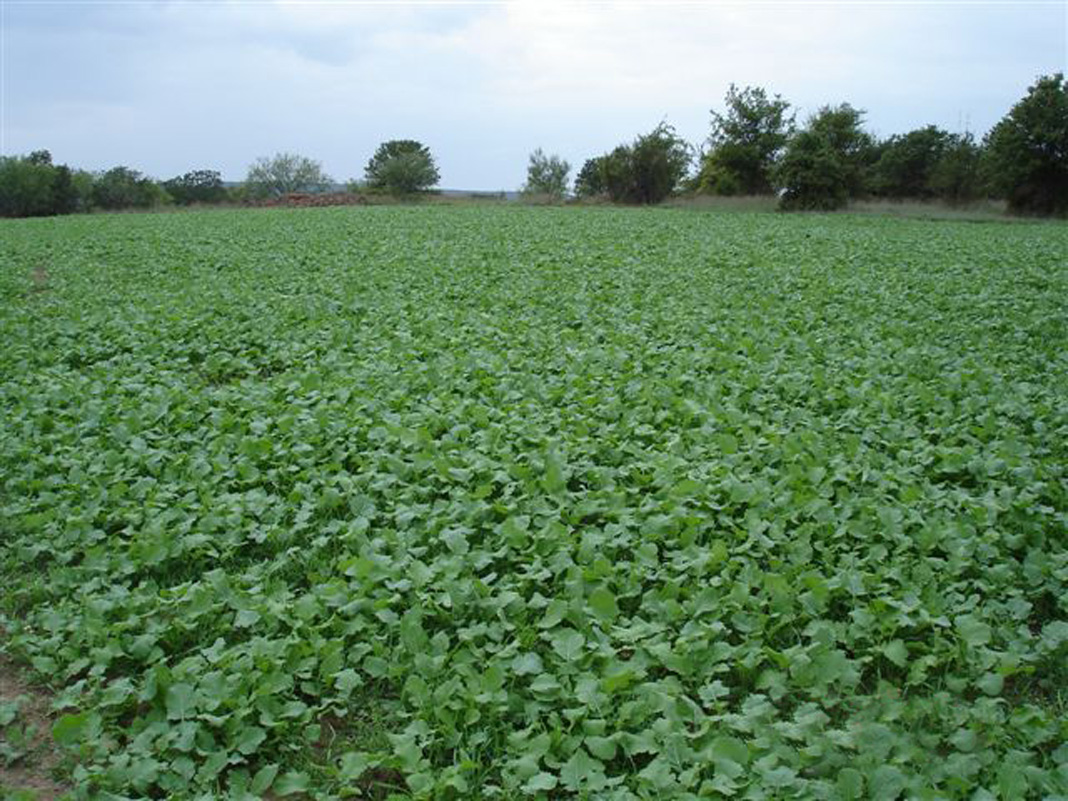
Fast-Growing Brassica With Valuable Bulb Production
Purple Top Turnip is a widely used annual brassica that produces both leafy top growth and a substantial round root or bulb. Livestock and wildlife can utilize both portions of the plant when managed appropriately.
Purple Top establishes quickly from small seed and can provide useful seasonal cover, nutrient uptake and forage during relatively short planting windows.
It can be planted as a pure stand but is especially useful as a low-rate component of diversified forage, grazing, wildlife and cover crop mixtures.
Why Purple Top?
Purple Top should not be confused with a leafy forage rape. Its strength is the combination of useful top growth and substantial bulb production.
That makes it particularly attractive where livestock or wildlife can utilize both above-ground foliage and the energy-rich root portion of the crop.
What Purple Top Turnip Brings to the Stand
Rapid Establishment
Small seed and fast early growth allow Purple Top Turnip to establish useful seasonal cover relatively quickly when moisture and temperature are favorable.
Bulb Production
Develops a substantial storage root that differentiates Purple Top from leafy forage brassicas such as Trophy Rape.
Grazing Value
Both tops and roots can contribute highly digestible forage when the crop is incorporated into a properly managed livestock diet.
Nutrient Scavenging
Active brassica growth can capture available nutrients during the growing period and retain them in plant biomass.
Wildlife Attraction
Turnip foliage and roots can provide valuable seasonal forage in wildlife habitat and food-plot plantings.
Mix Diversity
Adds a broadleaf brassica with a different root system and growth habit to cereal- and legume-based mixtures.
Where Purple Top Turnip Fits
Livestock Grazing
Adds highly digestible brassica foliage and accessible root forage to appropriately managed grazing systems.
Wildlife Habitat
A popular food-plot component where deer and other wildlife can utilize foliage and roots.
Cover Crops
Adds quick broadleaf growth, nutrient capture and functional diversity to multi-species cover crops.
Forage Mixtures
Works well at lower rates alongside cereal grains, grasses, legumes and other forage brassicas.
Purple Top Turnip Planting Information
Turnip seed is small and should be planted shallowly into a firm seedbed. Adequate surface moisture is important for rapid and uniform establishment.
Seeding rates are general guidelines. Rates should be adjusted for planting method, intended use, seedbed conditions, soil moisture and mix composition. Brassica seed planted deeper than necessary may have reduced emergence.
Purple Top Turnip allocates meaningful growth to its bulb, which is one reason it should be positioned differently from dedicated leafy forage turnips and forage rape.
The root can provide additional grazing and wildlife value, while the growing plant contributes another rooting type and nutrient-scavenging component to a diverse cover crop.
Turnip, Rape & Radish Do Different Jobs
Brassicas should be selected for their actual function rather than treated as interchangeable cover crop species.
Best positioned where bulb production, grazing, wildlife attraction and mixed above- and below-ground forage are desired.
Better suited where rapid leafy forage production and above-ground brassica biomass are the main priorities.
Better positioned where a large penetrating taproot, nutrient scavenging and soil-conditioning function are more important than livestock bulb forage.
Add Brassica Diversity Without Overloading the Mix
Because turnip seed is small and establishes aggressively, relatively little seed is needed in multi-species mixtures.
Oats
Adds upright cereal forage, fibrous rooting and substantial cool-season biomass.
Triticale
Adds vigorous cereal growth and additional forage and residue.
Forage Peas
Adds a broadleaf legume component and biological nitrogen-fixing potential when successfully nodulated.
Annual Ryegrass
Adds dense fibrous rooting and a complementary cool-season grass component.
Brassica Forage Requires Management
Introduce Livestock Gradually
Brassica forage is highly digestible. Introduce animals gradually and provide access to dry hay or grass forage rather than relying on lush turnips as the entire ration.
Monitor Roots & Animal Access
Purple Top develops substantial bulbs that livestock may consume directly. Monitor grazing behavior and forage availability, particularly when animals are unfamiliar with turnip-based grazing.
Need Purple Top Turnip Seed?
Contact Weaver Seed for current availability, wholesale pricing, livestock and wildlife mixtures, custom cover crops and help determining the appropriate Purple Top Turnip seeding rate.
Contact Weaver Seed