
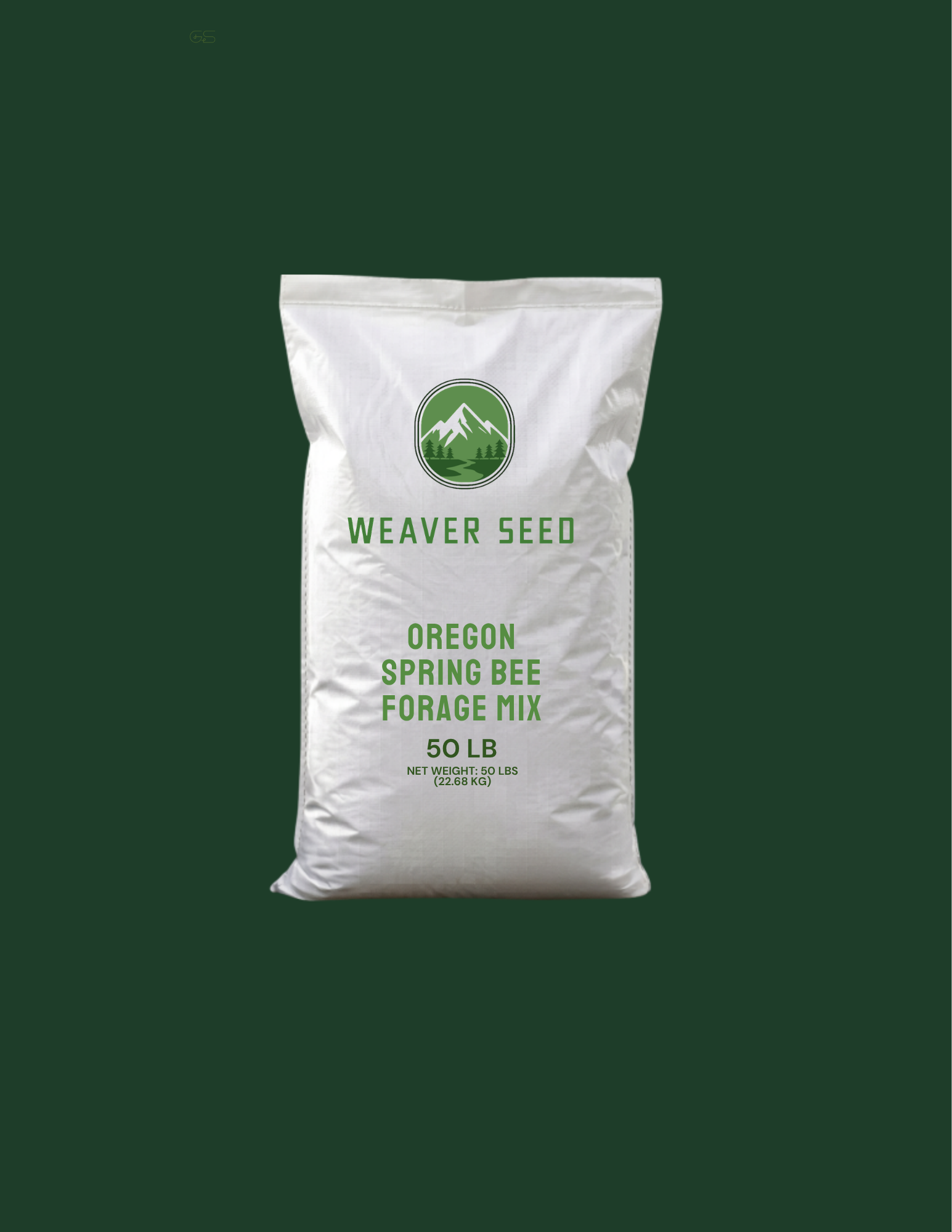
Spring Bee Forage Mix
Spring Bee Forage Mix combines flowering vetches, annual clovers and lacy phacelia to create a diverse cool-season cover crop designed to provide abundant spring bloom and forage for bees and other beneficial pollinators.
Built Around Flowering Legumes & Phacelia
The blend combines complementary flowering species to provide pollinator forage while also functioning as a productive cool-season agricultural cover crop.
Mix Note: Spring Bee Forage Mix is formulated as a flowering agricultural cover crop rather than an ornamental wildflower mixture. Component availability can vary by crop year; contact Weaver Seed for current availability.
More Than a Single Flowering Species
Multiple legumes and phacelia create a more diverse flowering stand while providing useful cover-crop functions during the cool season.
Spring Pollinator Forage
Flowering clovers, vetches and phacelia provide nectar and pollen resources during the spring bloom period.
Bloom Diversity
Multiple flowering species provide different flower types and growth habits rather than relying on one pollinator species alone.
Nitrogen-Fixing Legumes
Vetches and clovers provide biological nitrogen-fixation potential when properly established and appropriately inoculated.
Seasonal Ground Cover
Cool-season growth provides living cover between crop rows, along field borders or in dedicated habitat areas.
Rooting Diversity
A multi-species stand creates a more diverse rooting system than a single-species flowering cover crop.
Agricultural Habitat
Designed for working farms, orchards, vineyards and other agricultural sites where flowering habitat is part of the management objective.
A Flowering Cover Crop for Managed Agricultural Areas
Spring Bee Forage Mix is best suited to locations where the stand can establish during the cool season and be allowed to reach flowering in spring. It can be used within permanent-crop systems or in dedicated pollinator and beneficial-insect habitat areas.
Plant for Strong Cool-Season Establishment
Planting timing should be selected so the stand has adequate cool-season moisture and growing time before the desired spring flowering period.
Prepare the Seedbed
Start with a firm seedbed and good seed-to-soil contact. Avoid leaving the planting surface loose or excessively cloddy.
Plant Shallow
Drill approximately 1/4 to 1/2 inch deep. When broadcasting, cover lightly and roll or cultipack to improve seed-to-soil contact.
Allow Spring Bloom
If pollinator forage is the primary objective, allow the planting to reach flowering before mowing or terminating the stand.
Seeding Rate: Drill approximately 25–30 lb/acre. For broadcast establishment, approximately 30–35 lb/acre may be appropriate where conditions and seedbed preparation justify the higher rate.
Planting Window: Despite the name, Spring Bee Forage Mix is primarily designed to provide spring bloom. In many California and other Mediterranean-climate production areas, the mix is established during the fall or cool season so plants are well developed before spring flowering. Adjust planting dates for local climate, elevation, frost risk, rainfall and irrigation.
Inoculation: Vetches and clovers rely on compatible rhizobia for effective biological nitrogen fixation. Verify that legume components are appropriately inoculated for the species being planted.
Management: Bloom timing, stand height and total growth will vary with planting date, location, moisture and seasonal conditions. Where the mix is intended to remain an annual cover, manage the stand before unwanted viable seed production.
Looking for a Spring Pollinator Cover Crop?
Contact Weaver Seed with your location, acreage, crop system, planting method and available moisture for current Spring Bee Forage Mix availability, pricing or help determining whether the mix fits your site.
Request Pricing