
Annual Medic
Low-growing cool-season annual legumes valued for nitrogen fixation, forage, soil cover and self-reseeding potential. Weaver Seed offers multiple medic types to fit different soils and agricultural systems, including Barrel Medic, Burr Medic and Snail Medic.
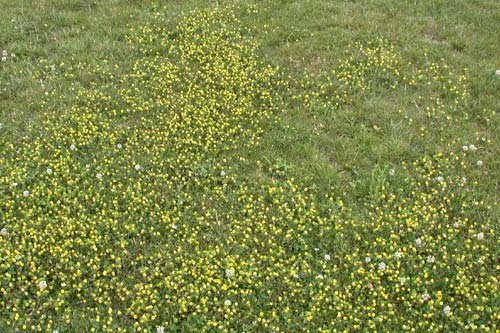
Low-Growing Annual Legumes Built for Western Agriculture
Annual medics are members of the Medicago genus and are closely related to alfalfa. They are generally low-growing cool-season legumes adapted to Mediterranean-type production systems, including many areas of California.
Medics are used for cover crops, pasture, forage, green manure and diversified agricultural seed mixtures. When effectively inoculated and successfully nodulated, they can biologically fix atmospheric nitrogen.
Many annual medics also produce a percentage of hard seed, giving them the potential to re-establish from previously produced seed when conditions and management are favorable.
One Name — Several Different Medics
“Medic” should not be treated as one uniform species. Barrel, Burr and Snail medic have different seed sizes, growth characteristics and soil preferences.
Selecting the appropriate type for the field is more important than simply choosing whichever medic happens to be available.
Medic Options From Weaver Seed
Weaver Seed carries Barrel Medic, Burr Medic and Snail Medic. Availability of individual varieties, coatings and seed lots may vary throughout the season.
Barrel Medic
A productive annual medic particularly suited to neutral-to-alkaline soils. Barrel medic is widely used for cover crops, pasture and self-reseeding systems.
Burr Medic
A versatile medic with strong adaptation across many California environments. Burr medic is especially notable for its ability to naturally reseed when seed production and field management allow.
Snail Medic
A larger-seeded annual medic best adapted to neutral-to- alkaline and calcareous soils. Snail medic adds productive legume growth to pasture, cover crop and soil-building systems.
What Annual Medics Bring to the Field
Nitrogen Fixation
Properly inoculated and effectively nodulated medics can biologically fix atmospheric nitrogen and build nitrogen-rich legume biomass.
Low-Growing Cover
Their generally prostrate growth habit can provide useful seasonal soil cover without producing the tall canopy of many cereal cover crops.
Reseeding Potential
Hard seed production can allow compatible medic stands to regenerate in later seasons when plants are allowed to produce mature seed.
Forage Value
Annual medics can provide palatable cool-season forage for appropriately managed livestock and pasture systems.
Green Manure
Medic growth can be terminated and returned to the cropping system as legume residue and organic material.
Dryland Potential
Several annual medics are adapted to Mediterranean climates and seasonal rainfall patterns common in Western agriculture.
Where Annual Medics Fit
Vineyards
Low-growing annual legumes can fit vineyard middles where nitrogen contribution, soil cover and manageable canopy height are priorities.
Orchards
Useful in orchard-floor systems where cool-season cover and potential self-reseeding are desirable.
Pasture & Range
Adds annual legume growth and forage diversity to compatible pasture and range-improvement programs.
Cover Crop Mixes
Can be combined with grasses, clovers and other compatible species for greater functional diversity.
Medic Seeding Rates Vary by Type
Medic species differ considerably in seed size. Use the rate appropriate for the specific medic rather than applying one generic seeding rate to every type.
Seeding rates are general guidelines for pure stands and should be adjusted for variety, seed size, germination, coating, planting method, intended use, field conditions and mix composition. Medic seed is relatively small and should not be planted unnecessarily deep.
OMRI-Listed Coating Available
Medic seed can be available with an OMRI-listed coating for customers who require an input option suitable for organic production systems. Contact Weaver Seed for current coated-seed availability, specific medic types and lot documentation.
One of the characteristics that separates annual medics from many other cover crop legumes is their ability to produce hard seed. A portion of this seed can remain dormant and germinate during future favorable seasons.
This can make medics useful in systems designed around self-regenerating annual legumes. It can also create unwanted volunteers where reseeding is not desired, so management should match the intended system.
Build a More Diverse Cool-Season Stand
Sub Clover
Adds another low-growing annual legume with complementary adaptation and reseeding characteristics.
Annual Ryegrass
Adds dense fibrous roots and productive grass growth to medic-based mixtures.
Blando Brome
Adds a cool-season annual grass component for range and dryland systems.
Clovers
Multiple annual legumes can broaden maturity timing and adaptation across variable field conditions.
Match the Medic to the Soil
Know Your Soil pH
Barrel and particularly Snail Medic generally favor neutral to alkaline soils. Burr Medic has broader pH adaptation and is typically the better option where soil is more acidic.
Use Compatible Inoculation
Effective nitrogen fixation depends on compatible rhizobia and successful nodulation. Appropriate medic/alfalfa-type inoculation should be considered where compatible bacteria are not already established.
Need Medic Seed?
Contact Weaver Seed for current Barrel Medic, Burr Medic and Snail Medic availability, OMRI-listed coating options, wholesale pricing and help selecting the right medic for your soil and production system.
Contact Weaver Seed