
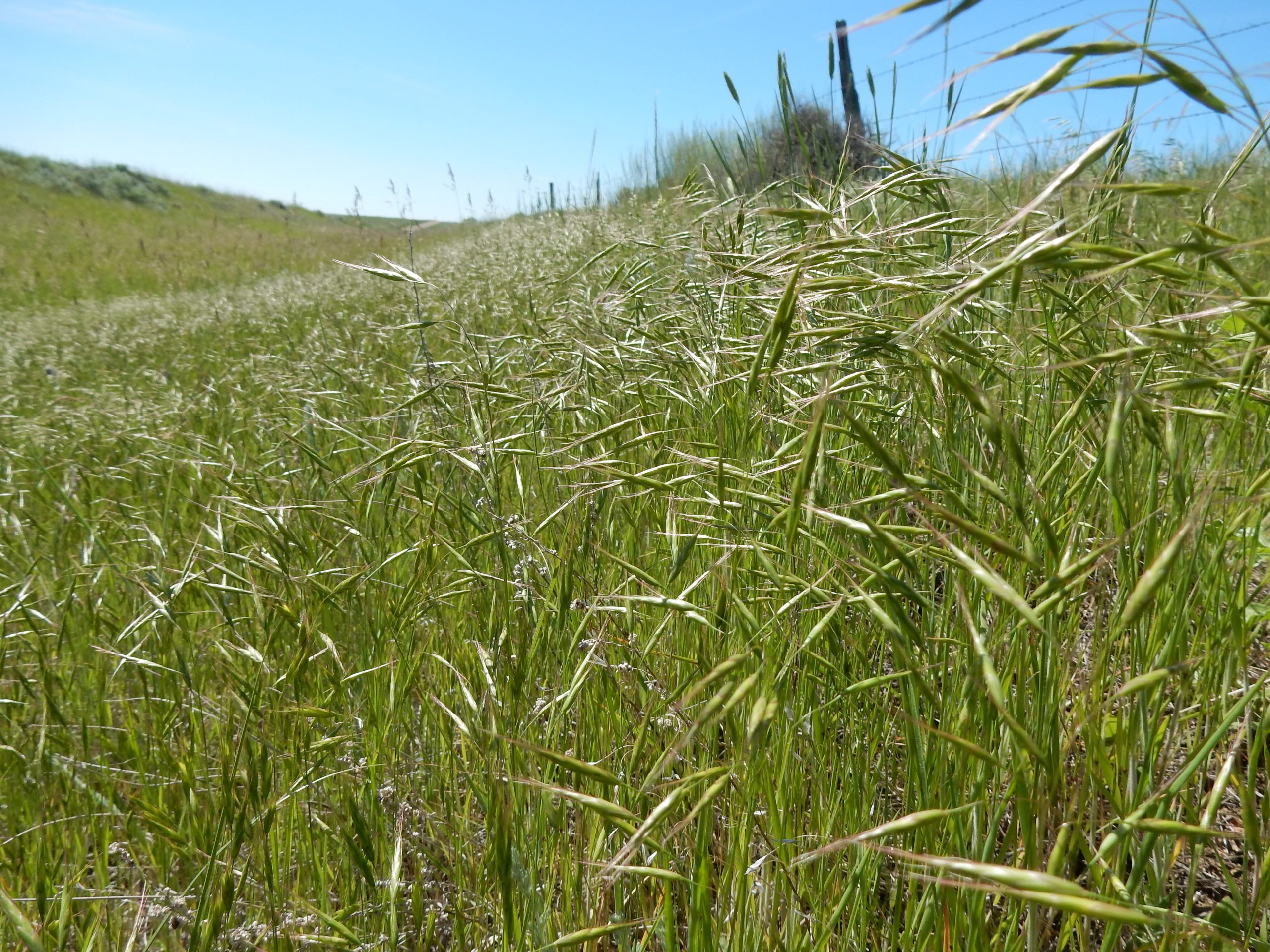
Meadow Brome
Meadow Brome (Bromus biebersteinii) is a cool-season perennial forage grass valued for palatability, productive regrowth and persistence under managed grazing. It is particularly useful in irrigated pasture and in non-irrigated forage systems where annual precipitation is adequate for perennial grass production.
Why Plant Meadow Brome?
Meadow Brome is particularly useful in pasture systems where palatability, regrowth after grazing and perennial stand persistence are priorities.
Excellent Palatability
Meadow Brome produces leafy forage that is readily utilized by grazing livestock under proper management.
Strong Regrowth
Its ability to regrow after defoliation makes Meadow Brome especially useful in rotational grazing systems.
Perennial Persistence
Established stands can provide productive forage over multiple seasons when moisture, fertility and grazing management are appropriate.
Pasture Performance
Meadow Brome is well suited to managed pasture where repeated grazing and recovery cycles are part of the system.
Hay Potential
It can also be harvested for hay when cutting is timed to maintain desirable forage quality.
Legume Compatibility
Meadow Brome can be used with compatible forage legumes such as alfalfa, birdsfoot trefoil and other pasture legumes.
Meadow Brome Seeding Rates
USDA NRCS recommendations distinguish between drilled establishment and broadcast or critical-area seeding.
Planting Note: Establish Meadow Brome in a firm, weed-controlled seedbed with good seed-to-soil contact. Keep seed relatively shallow. Seeding rates should be reduced appropriately when Meadow Brome is included as one component of a forage mixture.
Best Uses for Meadow Brome
Rotational Grazing
Strong regrowth following grazing makes Meadow Brome particularly useful in managed rotational systems.
Irrigated Pasture
A productive perennial grass option for irrigated pasture where cool-season forage production is desired.
Hay Production
Can be harvested as stored forage when maturity and cutting timing are managed for the desired feed quality.
Grass-Legume Mixtures
Can be combined with compatible forage legumes to increase pasture diversity and forage quality.
Manage for Regrowth & Persistence
Meadow Brome performs best when grazing and harvest management allow plants time to recover between defoliation events.
Build the Stand First
Avoid heavy grazing until seedlings have developed adequate root systems and resist pulling.
Use Rotation
Rotate livestock and provide recovery periods rather than maintaining continuous heavy grazing pressure.
Match Water to Site
Meadow Brome can be grown under irrigation or on non-irrigated sites where annual precipitation is sufficient for perennial forage production.
Manage to Production
Base fertility decisions on soil testing, forage yield goals and whether the stand includes nitrogen-fixing legumes.
Dryland Site Note: Meadow Brome is not a low-rainfall range grass for every environment. Utah State recommends it for irrigated ground or non-irrigated sites receiving roughly 15 inches or more annual precipitation. Match the species to local rainfall, soils and management before planting.
Looking for Meadow Brome Seed?
Contact Weaver Seed for current Meadow Brome availability, quantities, pricing or help determining whether it fits your pasture, grazing or hay program.
Request Pricing