
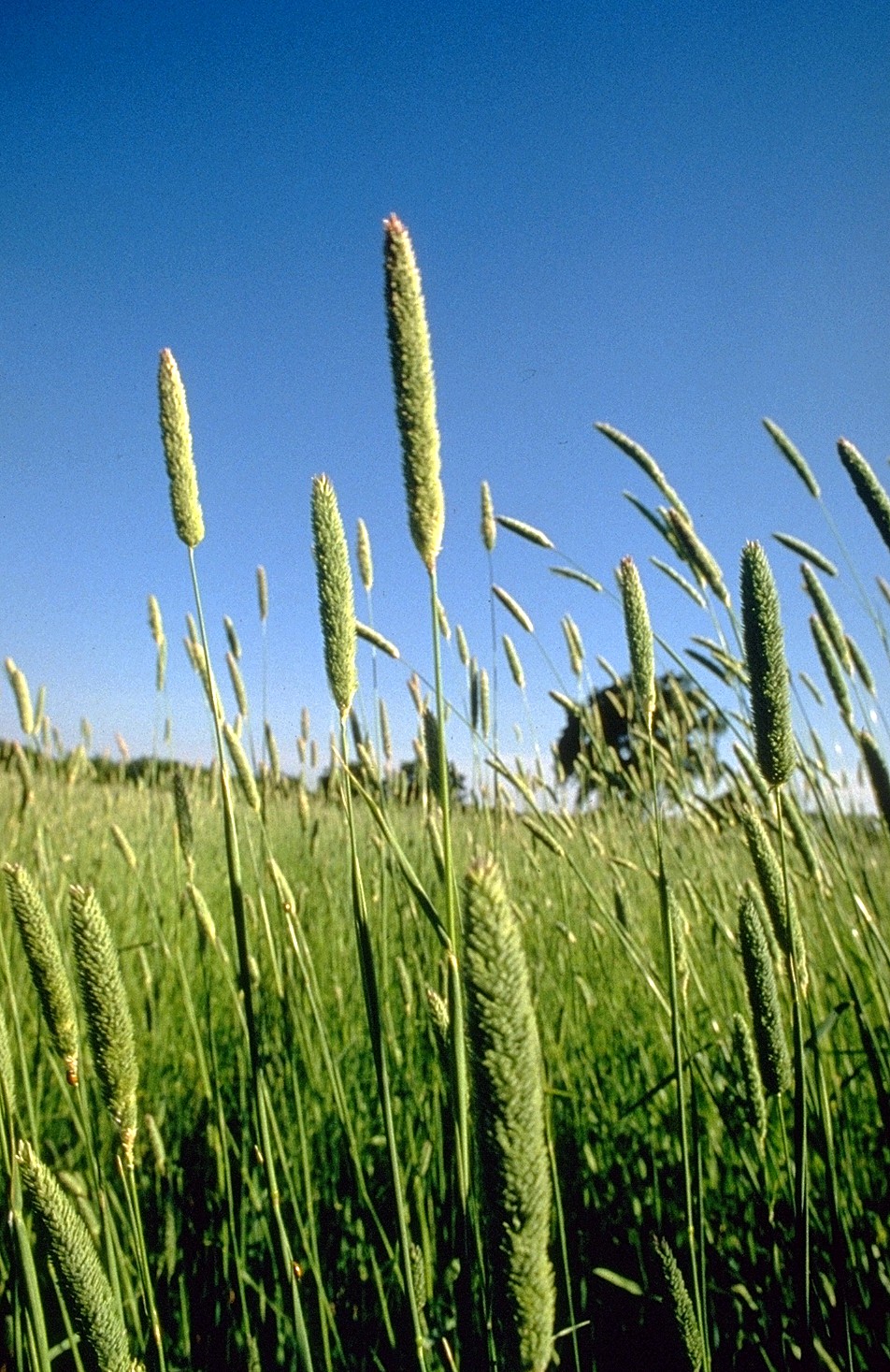
Harding Grass
Harding Grass (Phalaris aquatica) is a tall, perennial bunchgrass historically used for pasture and annual-range improvement in California. It begins growth with seasonal moisture, can provide early cool-season forage and may remain green later into the season than surrounding annual grasses.
Why Plant Harding Grass?
Harding Grass has historically been used where a perennial cool-season forage component is desired within California's Mediterranean annual-range environment.
Extended Green Feed
Established stands can begin productive growth earlier and remain green later than surrounding annual range grasses under favorable moisture conditions.
Perennial Forage
Adds a long-lived perennial grass component to suitable pasture and range systems.
Cool-Season Growth
Growth begins with fall moisture and continues during the cooler portion of the California forage season.
Range Improvement
Historically used to increase perennial forage presence in annual grass range.
Stand Persistence
Once established, plants can form large, persistent bunches and can regenerate through seed under suitable management.
Mediterranean Climate Fit
Adapted to regions with cool wet winters and dry summers where soil and rainfall conditions support establishment.
Planting Harding Grass
A common straight-stand seeding rate is approximately 8–10 lb per acre.
USDA NRCS recommends drilling into a firm, weed-free seedbed where possible. If seed is broadcast and then covered by harrowing or dragging, the seeding rate may need to be increased.
Keep seed shallow at approximately ¼ to ½ inch deep and coordinate dryland planting with dependable fall moisture.
Establishment Note: Harding Grass can be slow to develop from seed. Reducing competition from annual weeds during establishment can materially improve stand development.
Best Uses for Harding Grass
Annual Range Improvement
Can add a persistent perennial forage component to compatible annual-range systems.
Dryland Pasture
Useful where seasonal rainfall and soils provide enough moisture for perennial establishment.
Managed Grazing
Provides forage when grazing timing and recovery are managed to protect the perennial stand.
Extended Forage Season
Can help extend the period of green feed relative to surrounding annual grasses.
Use Harding Grass Only Where It Fits
Invasiveness & Livestock Management
Harding Grass is an introduced species and is rated moderately invasive in California. It can escape planted areas and displace desirable vegetation in some habitats.
It should not be marketed as a California native grass and should not be used in native restoration projects or other sites where spread into adjacent natural areas is a concern.
USDA NRCS also notes that Phalaris aquatica has been associated with toxic effects in sheep and cattle. Livestock use should follow current forage-safety guidance for the specific stand and management conditions.
Protect New Stands & Manage Established Growth
Control Competition
Begin with a clean seedbed and reduce annual weed competition while seedlings develop.
Delay Grazing
Protect the stand during establishment and allow roots and crowns to develop before significant grazing.
Maintain Residual
Avoid grazing too closely and leave sufficient stubble to support regrowth and stand persistence.
Provide Rest
Periodic deferment following grazing allows plants to recover and rebuild root reserves.
Site Selection: Because Harding Grass can spread beyond intended plantings, site selection should consider adjacent natural areas, waterways, restoration sites and local invasive-species management objectives.
Looking for Harding Grass Seed?
Contact Weaver Seed for current availability, quantities, pricing or help determining whether Harding Grass is appropriate for your pasture or range-improvement project.
Request Pricing