
Garbanzo Beans
A cool-season annual pulse legume valued for grain production, crop rotation, biological nitrogen fixation and drought tolerance. Garbanzo beans are well suited to California agricultural systems and can also provide valuable broadleaf diversity in selected cover crop applications.
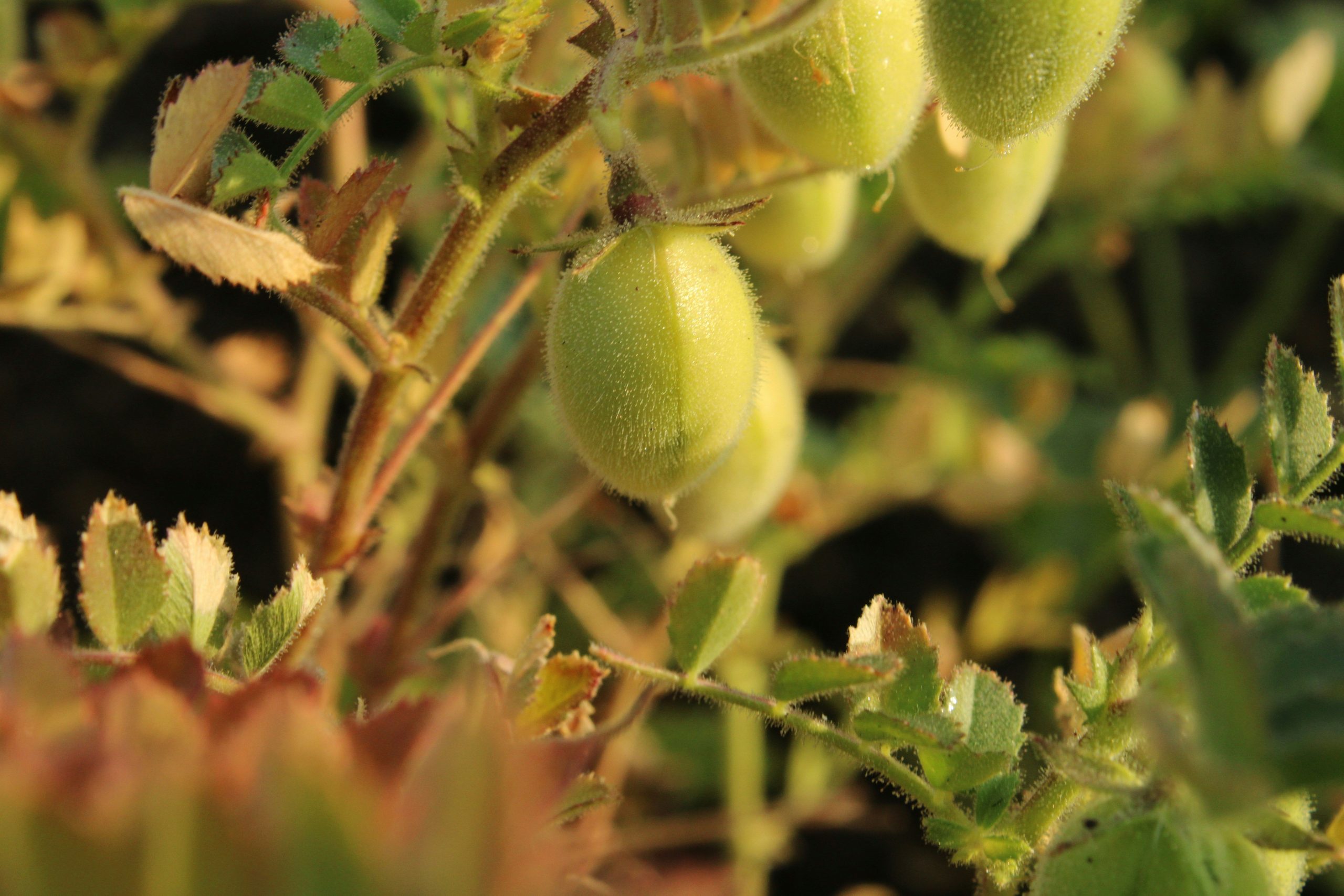
Proven Pulse Crop for California Agriculture
Garbanzo beans, also known as chickpeas, are annual legumes grown primarily for their dry edible seed. They provide a useful broadleaf crop option for diversified rotations and are valued for their adaptation to relatively dry production environments.
Garbanzos develop an upright, branching canopy and a strong taproot that allows the plant to explore deeper portions of the soil profile.
When effectively inoculated with compatible rhizobia and successfully nodulated, garbanzo beans can biologically fix atmospheric nitrogen.
Garbanzo = Chickpea
Garbanzo bean and chickpea are two common names for the same species, Cicer arietinum.
The crop should be managed separately from field peas, faba beans, cowpeas and common beans because planting, inoculation and production requirements are different.
What Garbanzo Beans Bring to the Rotation
Biological Nitrogen Fixation
Properly inoculated and nodulated garbanzo beans can fix atmospheric nitrogen and reduce their dependence on applied nitrogen fertilizer.
Drought Tolerance
Garbanzos are relatively drought tolerant and can make useful use of stored soil moisture once a strong root system develops.
Taproot Development
A substantial taproot allows the crop to explore deeper soil layers than many shallow-rooted annual species.
Rotation Diversity
Adds a broadleaf pulse crop to rotations that may otherwise be dominated by cereal grains or other grass crops.
Grain Production
Produces dry edible chickpeas for pulse and specialty grain markets.
Cover Crop Diversity
Can contribute legume growth, rooting diversity and biological nitrogen fixation in selected cover crop systems.
Where Garbanzo Beans Fit
Pulse Production
Grown commercially for dry edible chickpea seed and specialty grain markets.
Crop Rotation
Adds a broadleaf legume between cereal and grass-based production cycles.
Cover Crops
Adds a cool-season legume with taproot development and biological nitrogen-fixing potential.
Soil Building
Living roots and legume residue can contribute to diversified soil-management programs.
Garbanzo Bean Planting Information
Plant garbanzo beans into a firm, well-prepared seedbed with adequate moisture and consistent seed placement. Good seed-to-soil contact supports uniform emergence and stand establishment.
Weaver Seed recommends approximately 60 lb/acre. Final planting rate may be adjusted for seed quality, germination, planting method, soil moisture and specific field conditions.
Garbanzo beans are fundamentally a pulse crop rather than a high-biomass forage legume. Their strongest advantages are grain production, drought tolerance, rooting depth and their role as a broadleaf legume within diversified rotations.
In cover crop systems, garbanzos contribute through nitrogen fixation, living roots and crop diversity rather than simply maximizing above-ground biomass.
Establish Garbanzos for Strong Performance
Use Chickpea-Specific Inoculation
Garbanzo beans require compatible chickpea rhizobia for effective nodulation. Do not assume an inoculant intended for peas or vetch will provide the correct bacterial strain.
Avoid Poorly Drained Fields
Garbanzos perform best in well-drained soils. Prolonged saturated conditions can reduce establishment and increase disease pressure.
Consider Soil Salinity
Garbanzo beans are not among the more salt-tolerant crop options, so field salinity should be considered when selecting planting locations.
Plan the Rotation
Disease history and crop sequence should be considered, particularly where chickpeas or related pulse crops have recently been grown.
Need Garbanzo Bean Seed?
Contact Weaver Seed for current availability, wholesale pricing, cover crop applications and assistance planning a Garbanzo Bean planting at approximately 60 lb/acre.
Contact Weaver Seed