
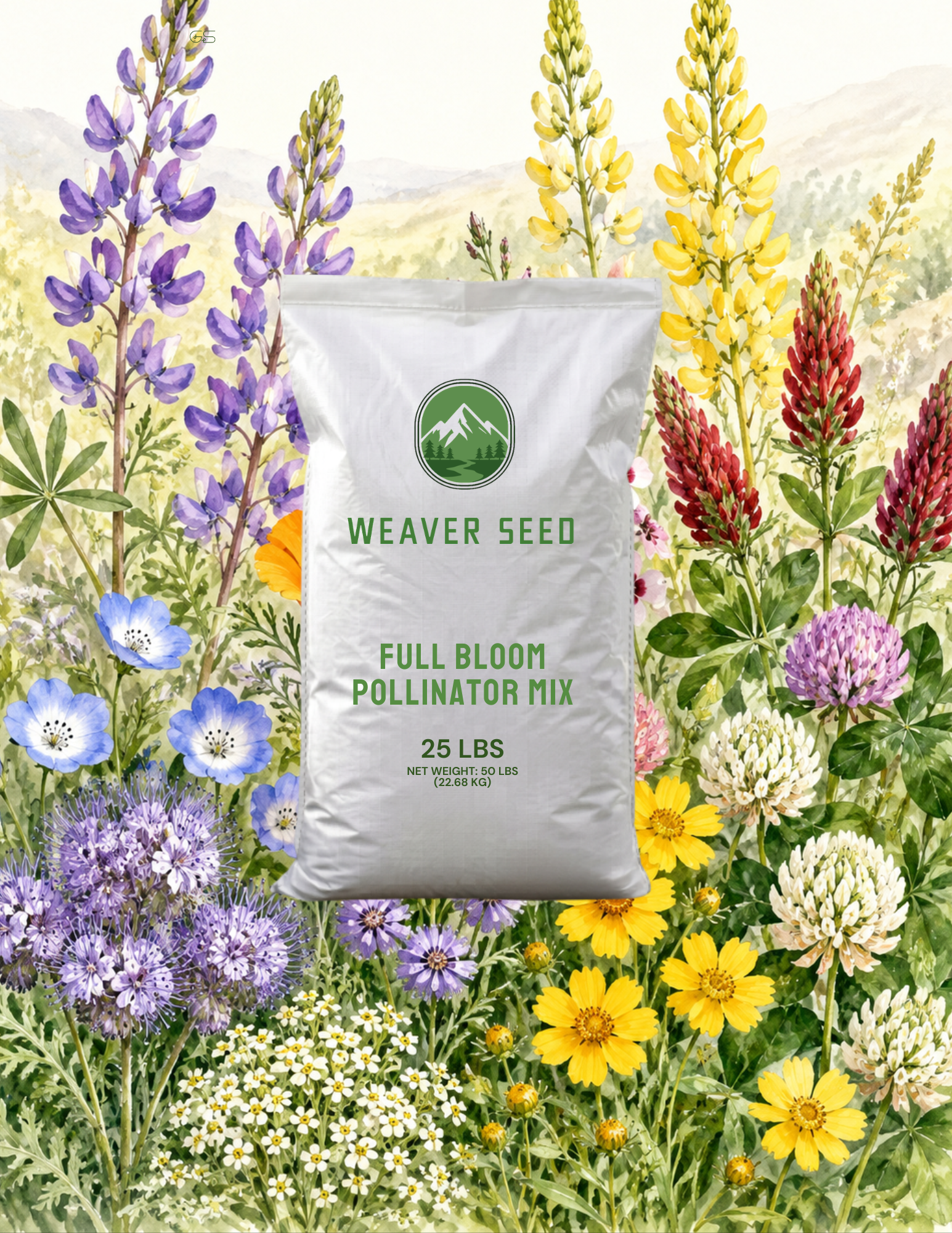
Full Bloom Pollinator Mix
Full Bloom Pollinator Mix combines colorful wildflowers, lupines and clovers in a diverse flowering blend designed for pollinator habitat, visual appeal and broad seasonal diversity. The mix brings together species with different bloom forms, plant heights and growth habits to create a varied planting rather than relying on a single flower type.
Full Bloom Pollinator Mix Components
A combination of lupines, California wildflowers, flowering broadleaves and clovers creates a diverse mix of color, plant structure and bloom types.
Mix Composition Note: Mix components are subject to change based on seed availability. When necessary, substitutions may be made with comparable species or varieties to maintain the intended function and character of the mix.
Built Around Flowering Diversity
Full Bloom combines multiple flower shapes, plant heights and species groups to create a visually diverse planting with a broad range of flowering characteristics.
Diverse Flower Forms
Lupines, poppies, phacelia, gilia, clovers and other wildflowers provide a range of flower shapes and structures within the same planting.
Multiple Plant Heights
Taller lupines and clovers combine with lower-growing species such as five spot, baby blue eyes and alyssum to create vertical diversity across the stand.
Broad Color Range
Orange, blue, purple, white, yellow and red flowering species create strong seasonal color and a distinctive habitat planting.
Legume Component
Crimson, Persian, balansa and white clovers add a flowering legume component and can biologically fix atmospheric nitrogen when successfully inoculated, established and nodulated.
Habitat Diversity
A multi-species flowering stand creates more structural and botanical diversity than a single-species planting, supporting broader habitat objectives.
Flexible Landscape Fit
Full Bloom can fit habitat borders, agricultural edges, designated pollinator areas and other sites where flowering diversity is a management goal.
Establishment Note: Flowering performance depends on planting timing, seedbed preparation, soil conditions, rainfall or irrigation, planting depth and successful establishment. Avoid planting wildflower seed too deeply; good seed-to-soil contact near the soil surface is important for many small-seeded species.
Wildflowers, Lupines & Clovers in One Pollinator Mix
The mix is designed around complementary plant groups rather than a single flower type. Lupines provide taller flowering structure, low- and mid-height wildflowers add color and canopy diversity, and flowering clovers contribute a productive legume component to the planting.
Management Note: If reseeding or natural regeneration is desired, allow selected plants to flower and mature seed before mowing or terminating the stand. Management should be adjusted to the site, species present and long-term planting goal.
Planning a Pollinator or Wildflower Planting?
Contact Weaver Seed for current Full Bloom Pollinator Mix availability, pricing or help determining whether this blend fits your habitat, agricultural or landscape project.
Request Pricing