
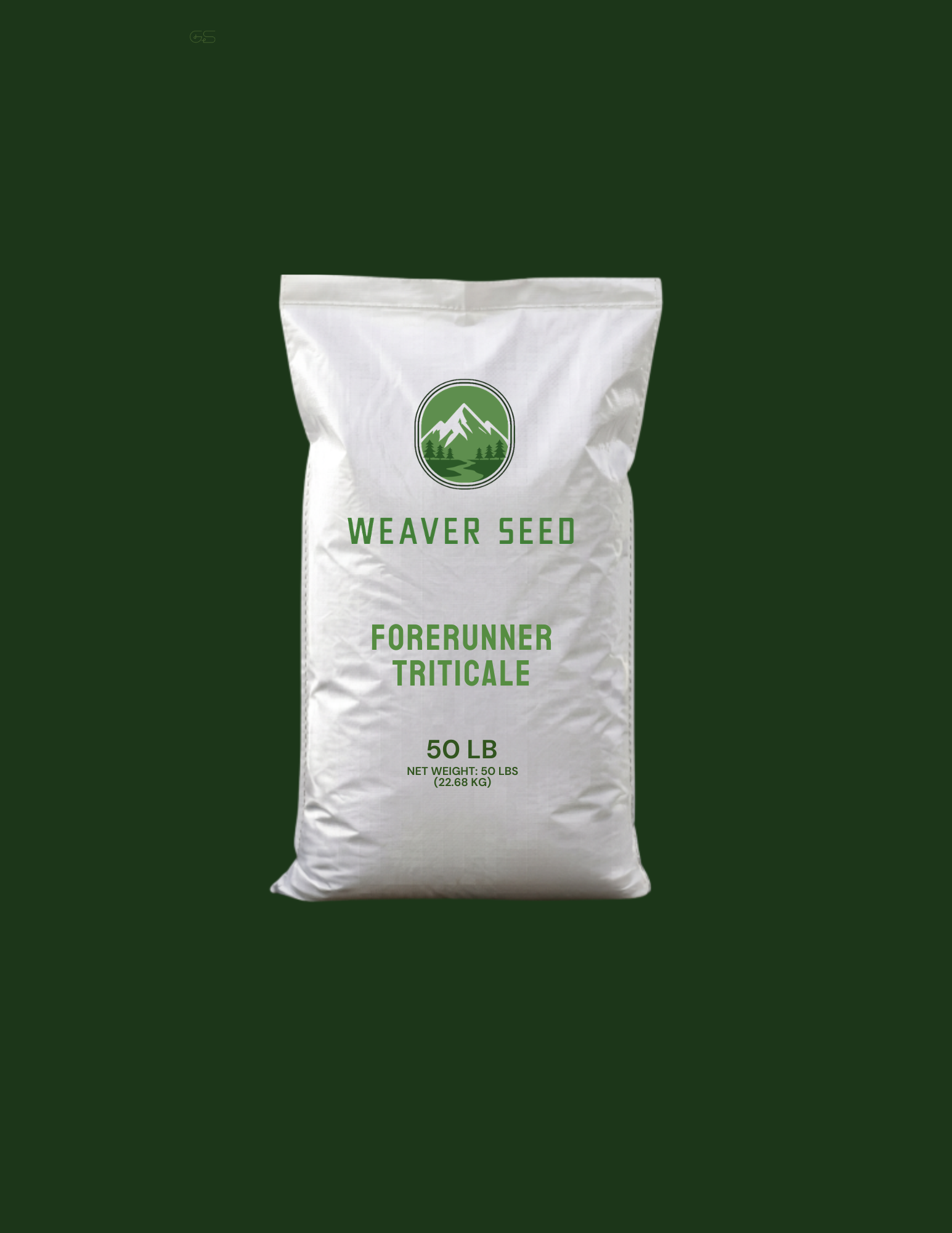
Forerunner Triticale
Forerunner is a facultative triticale variety developed for flexibility across forage and cover crop systems. Its growth habit allows it to fit a broader range of planting windows than a strictly spring- or winter-habit cereal, depending on region and production goals.
Forerunner Facultative Triticale
A flexible cereal variety positioned for forage production, cover cropping and multi-species agricultural seed mixtures.
Flexible Cereal Production
Forerunner combines the biomass potential of triticale with a facultative growth habit that can provide additional flexibility across different production systems.
Facultative Growth Habit
Forerunner is not restricted to a strictly spring- or winter-habit production pattern, giving growers additional flexibility when matching planting timing to local conditions.
Forage Potential
Forerunner can be managed for forage, hay or silage, with harvest timing selected according to the desired balance between forage quality and biomass.
Biomass Production
The medium-tall cereal growth habit can produce substantial vegetative material for forage, residue and cover crop applications.
Nutrient Capture
Actively growing cereal roots can capture available nutrients and retain them in plant biomass during the growing season.
Soil Coverage
A successfully established stand provides vegetative soil cover and the fibrous rooting characteristic of cool-season cereal crops.
Mix Compatibility
Forerunner can be planted alone or used as the cereal component in cover crop and forage mixtures with legumes and other species.
Match Management to the End Use
Forerunner can serve several different production goals, so planting and harvest management should reflect whether the crop is being grown primarily for forage, biomass or soil cover.
Management Note: Establishment, biomass production and forage performance vary with planting date, soil fertility, rainfall or irrigation, harvest timing and local growing conditions.
Forerunner Has Deep Roots at Weaver Seed
Forerunner has been part of the Weaver Seed triticale program for decades. Its long history reflects Weaver Seed's experience with cereal seed production and forage and cover crop markets throughout the West.
Looking for Forerunner Triticale?
Contact Weaver Seed for current Forerunner availability, pricing or help determining the appropriate seeding rate for your forage or cover crop project.
Request Pricing