
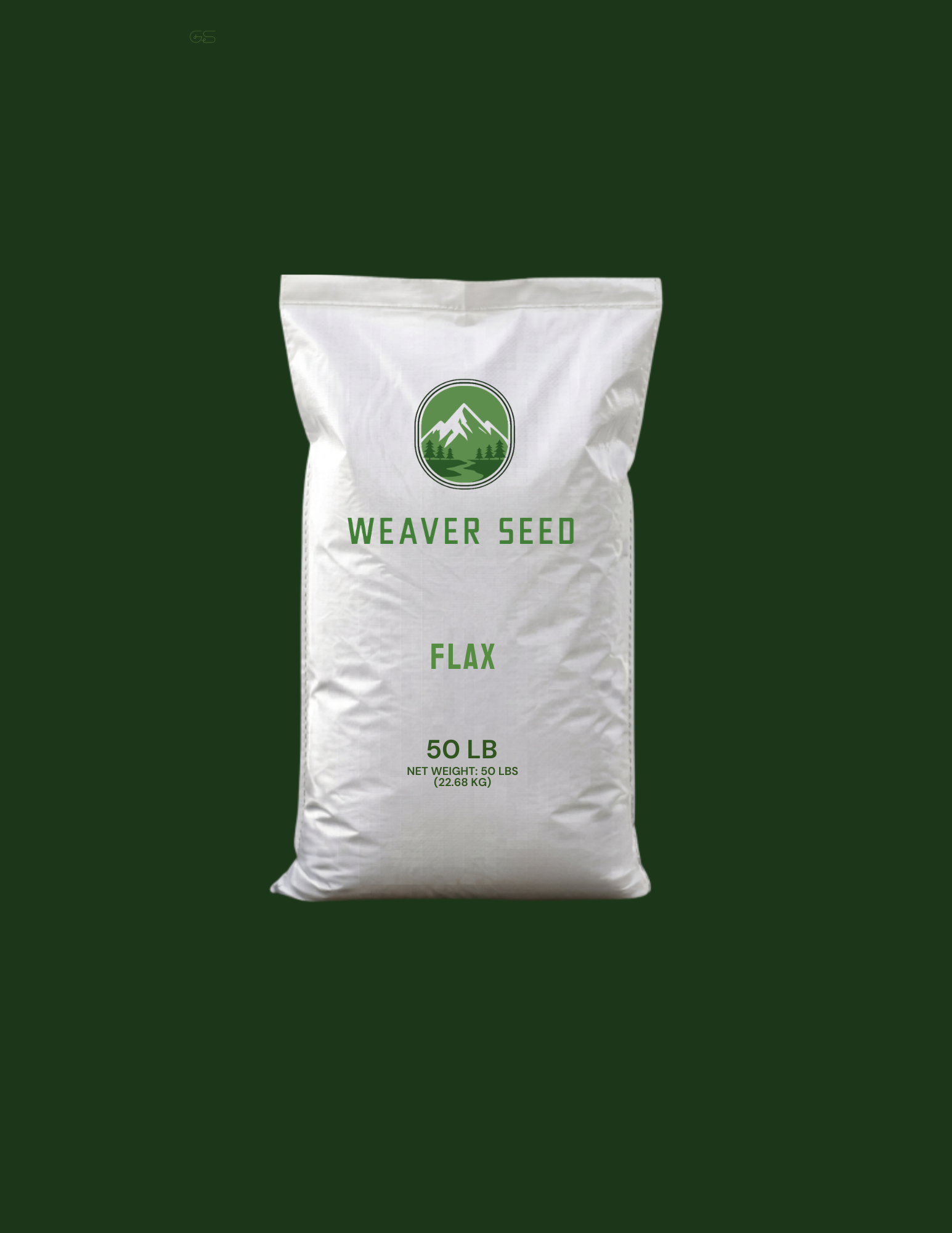
Common Flax
Common flax is an annual broadleaf species that can add functional and botanical diversity to cover-crop plantings. It develops a different canopy and rooting pattern than grasses, legumes and brassicas, making it useful as a component of multi-species cover crop programs.
A Broadleaf Component for Diverse Cover Crop Mixes
Flax can contribute a different plant architecture and rooting pattern than common cover-crop grasses, legumes and brassicas, helping broaden the functional diversity of a multi-species planting.
Broadleaf Diversity
Flax adds a non-legume broadleaf component to cover crop mixtures, increasing botanical diversity when combined with grasses, legumes or brassicas.
Complementary Rooting
Its rooting pattern differs from fibrous-rooted grasses, allowing flax to occupy a somewhat different portion of the soil profile within a diverse stand.
Living Soil Cover
When successfully established, flax contributes living vegetation and residue that can help reduce the amount of bare soil exposed during the growing period.
Mix Compatibility
Flax can be used at a reduced rate in mixtures where the goal is to add another functional group without allowing one species to dominate the stand.
Fine-Stemmed Growth
Flax produces relatively fine stems compared with many larger broadleaf cover crops, giving mixtures another canopy structure and residue type.
Flexible Cover Crop Role
Flax can be incorporated into diversified cover-crop programs where species diversity, soil cover and complementary rooting are management objectives.
Seeding Rate Note: Published cover-crop guidance commonly places full-rate flax stands around 30–50 lb per acre. Rates should generally be reduced when flax is used as one component of a mixture. Final rate should be adjusted for planting method, seedbed, site conditions and the intended role of flax in the mix.
Use Flax to Add Another Functional Group
Flax is especially useful in diversified cover-crop blends because it contributes a plant type that is distinct from cereals, clovers, peas and brassicas. That makes it a useful tool when the goal is to build a mix around complementary growth habits rather than a single species.
Establishment Note: Performance depends on planting timing, seedbed preparation, planting depth, soil moisture, rainfall or irrigation and successful stand establishment. Flax is generally best planted shallow into a firm seedbed with good seed-to-soil contact. Contact Weaver Seed for help incorporating flax into a custom cover-crop mixture.
Adding Flax to a Cover Crop Program?
Contact Weaver Seed for current Common Flax availability, pricing or help determining an appropriate rate for a single-species planting or custom cover-crop mixture.
Request Pricing