
North American Native Annual Wildflower
Clasping Coneflower
Dracopis amplexicaulis
Syn. Rudbeckia amplexicaulis
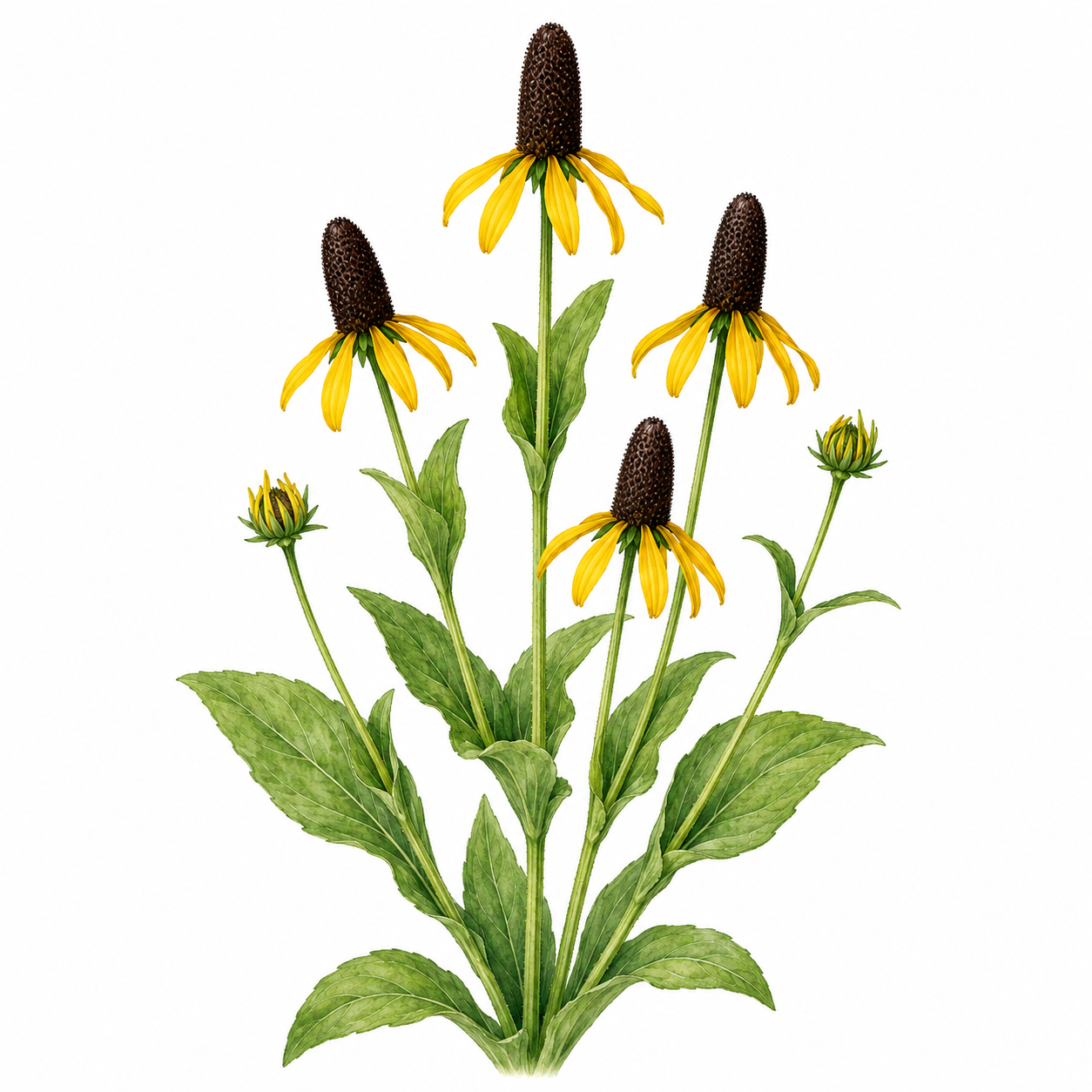
A distinctive annual coneflower with drooping golden-yellow petals, dark centers and characteristic stem-clasping leaves
Clasping Coneflower is a warm-season annual wildflower recognized by its bright yellow ray flowers surrounding a prominent dark brown central cone. The species gets its common name from its distinctive leaves, which partially wrap or clasp around the upright stems. It establishes quickly, flowers during the warm season and is well suited to annual wildflower, meadow and pollinator plantings.
Wildflower Characteristics
Why Plant Clasping Coneflower?
Clasping Coneflower combines rapid annual establishment, distinctive flower structure and strong pollinator appeal in a relatively easy-growing wildflower.
Clasping Leaves
Sessile upper leaves partially wrap around the stem, providing the distinctive botanical characteristic behind the common name.
Distinctive Flowers
Bright yellow ray flowers often droop away from a prominent dark brown cone, creating a highly recognizable flower form.
Pollinator Value
Summer flowers attract bees, butterflies and other visiting insects and can add useful floral resources to pollinator-oriented plantings.
Natural Reseeding
Clasping Coneflower can reseed readily when mature seed is allowed to develop and suitable bare soil is available for establishment.
Where It Fits
Best Uses for Clasping Coneflower
This species is particularly useful where warm-season annual color, pollinator value and a natural meadow appearance are desired.
Establishment & Management
Growing Clasping Coneflower
Clasping Coneflower establishes readily from seed and performs best where adequate sunlight, good seed-to-soil contact and sufficient establishment moisture are available.
Planting Depth
Seed very shallowly, approximately 1/16 inch deep. Avoid burying the small seed deeply.
Sunlight
Full sun is preferred, although the species can tolerate some partial shade depending on site conditions.
Soil & Moisture
Clasping Coneflower adapts to multiple soil types and performs especially well where soils receive moderate moisture without remaining persistently waterlogged.
Reseeding Management
Allow mature seed heads to remain when natural reestablishment is desired. Remove or mow plants before mature seed develops where volunteer stands need to be limited.
Easy-to-Recognize Annual
The Leaves Explain the Name
The defining feature of Clasping Coneflower is not just its dark-centered yellow flower. Upper leaves attach directly to the stem and partially surround it, creating the clasping appearance described by the species name. Combined with its drooping yellow rays and dark central cone, this makes the species readily recognizable in a wildflower stand.
Looking for Clasping Coneflower Seed?
Contact Weaver Seed for current availability, quantities, packaging or help incorporating Clasping Coneflower into an annual wildflower, pollinator or custom seed mixture.
Contact Weaver Seed