
Perennial Wildflower
Perennial Blue Lupine
Lupinus perennis
A perennial lupine with blue-violet flower spikes for meadows, pollinator habitat and naturalized plantings
Perennial Blue Lupine is a short-lived perennial wildflower recognized for upright spikes of blue to violet pea-like flowers and distinctive palmate foliage. A member of the legume family, it is adapted to relatively lean, well-drained soils and is particularly associated with open, sandy habitats. Its spring flowers provide valuable habitat for pollinators while adding strong vertical color to meadow and naturalized plantings.
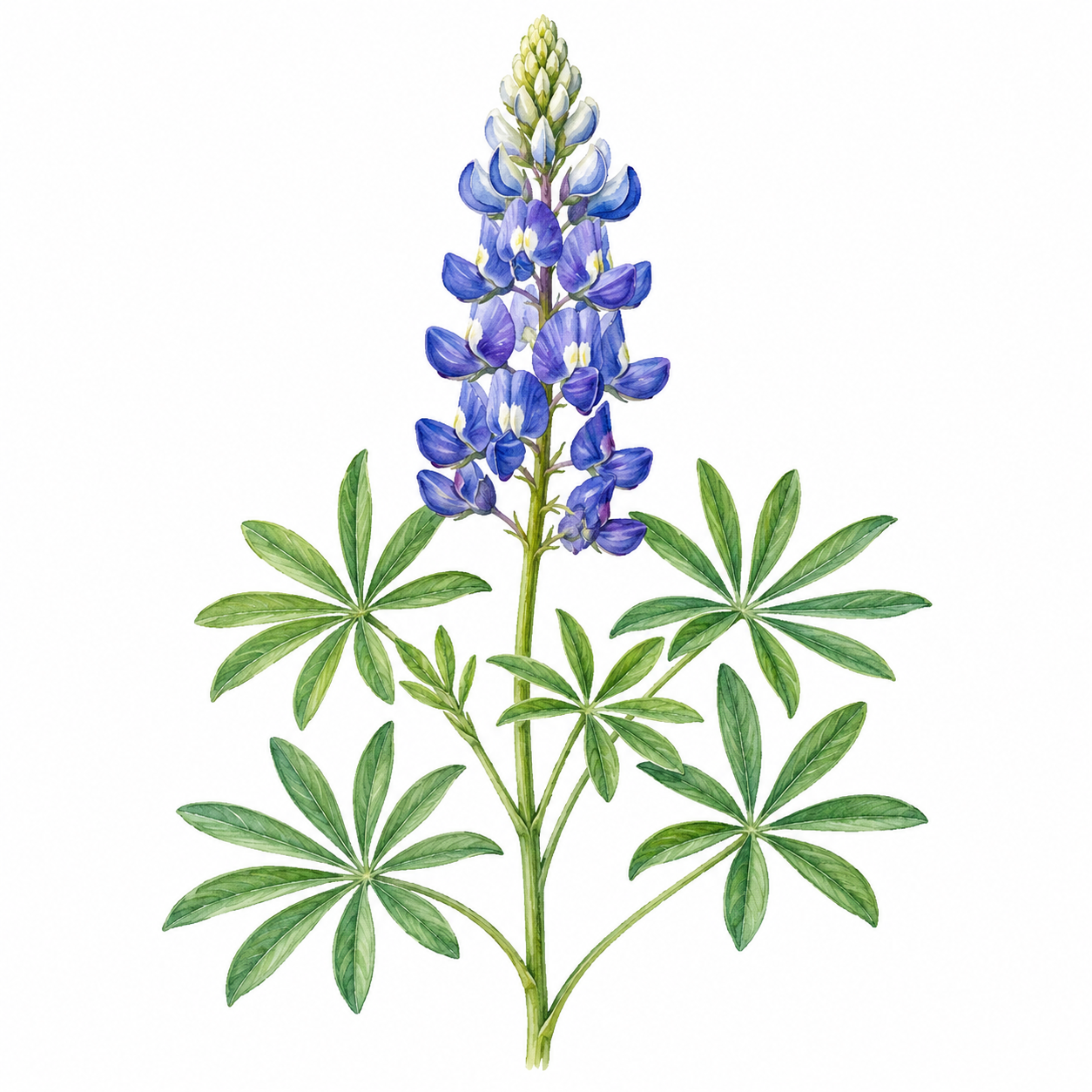
Wildflower Characteristics
Why Plant Perennial Blue Lupine?
Perennial Blue Lupine combines distinctive perennial flowers, pollinator habitat and adaptation to low-fertility, well-drained sites.
Perennial Growth
Unlike annual lupines, Lupinus perennis can return for multiple growing seasons where climate and site conditions are suitable.
Blue-Violet Flower Spikes
Upright racemes of pea-like flowers provide strong blue to violet spring color above the foliage.
Pollinator & Insect Habitat
Flowers provide pollen resources for bees, while the plant also has important ecological relationships with several native butterfly species.
Legume Function
As a member of the legume family, lupine forms relationships with nitrogen-fixing bacteria that help it persist in nutrient-poor soils.
Where It Fits
Best Uses for Perennial Blue Lupine
This lupine is particularly well suited to open, sunny plantings with well-drained soil where perennial wildflower structure and pollinator value are desired.
Establishment & Management
Growing Perennial Blue Lupine
Perennial Blue Lupine performs best when planted in an open site with abundant sunlight, good drainage and limited competition during establishment.
Site Selection
Choose a sunny, open site with well-drained soil. Wild Blue Lupine is particularly associated with sandy, relatively low-fertility habitats.
Seed Establishment
Lupine seed has a hard seed coat that can restrict water uptake. Scarification may improve germination by allowing moisture to penetrate the seed coat.
Perennial Development
Allow plants adequate time to establish their root systems. Perennial wildflower stands generally require more patience during establishment than fast-growing annual displays.
Drainage
Avoid persistently wet or poorly drained locations. Well-drained conditions are important for long-term performance.
Ecological Value
A Perennial Lupine with Important Habitat Value
Perennial Blue Lupine is more than an ornamental wildflower. Its ability to grow in nutrient-poor sandy soils and its relationship with nitrogen-fixing bacteria allow it to occupy habitats where many species struggle. It also provides important ecological value for native insects, making it a strong choice for appropriately located perennial meadow and pollinator plantings.
Looking for Perennial Blue Lupine Seed?
Contact Weaver Seed for current availability, quantities, packaging or help incorporating Perennial Blue Lupine into a perennial wildflower, pollinator or custom seed mixture.
Contact Weaver Seed