
Biennial / Short-Lived Perennial Wildflower
Black-Eyed Susan
Rudbeckia hirta
A recognizable North American wildflower with golden-yellow petals surrounding prominent dark brown centers
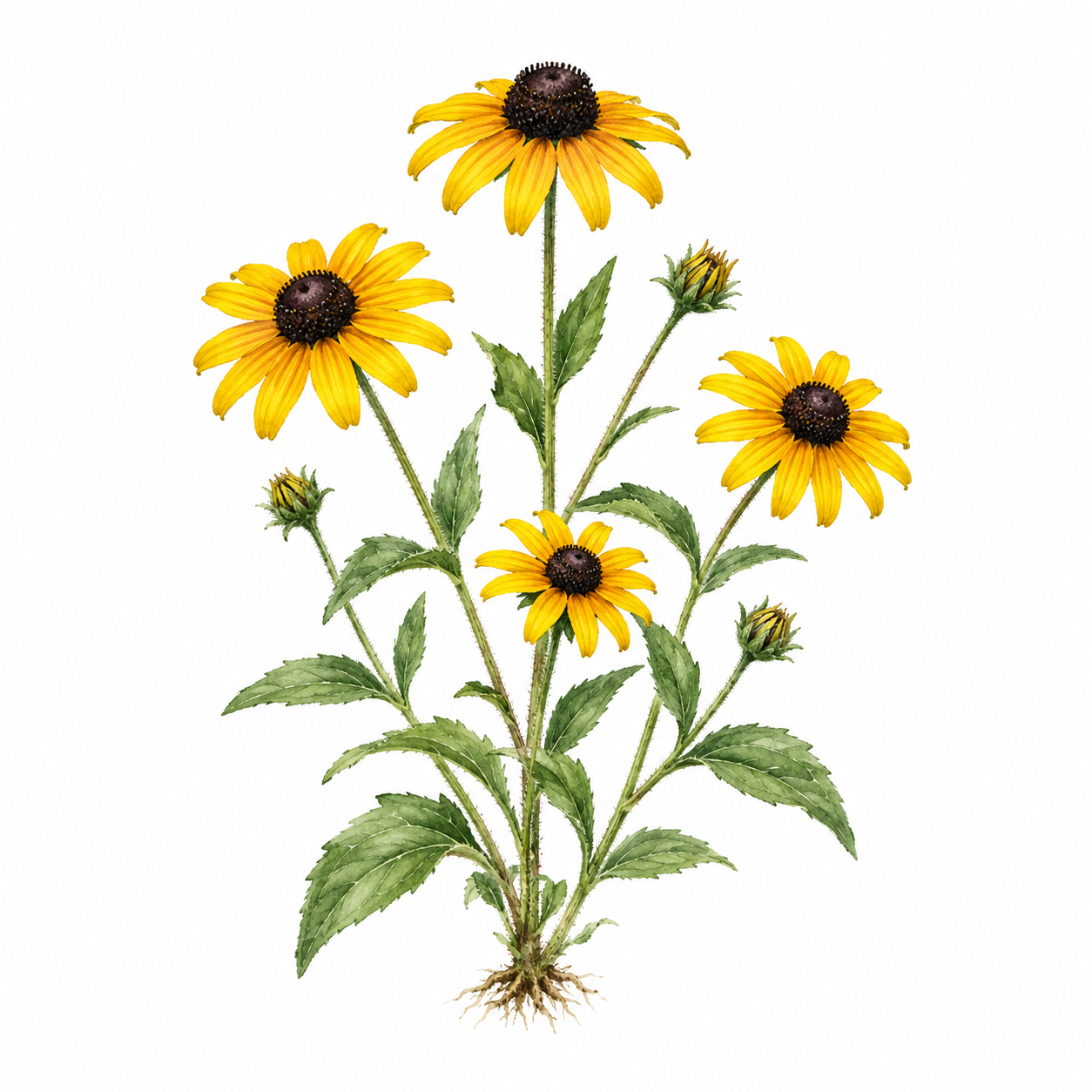
Black-Eyed Susan is a widely recognized flowering species known for bright golden-yellow ray flowers surrounding a raised dark brown central disc. Upright flowering stems rise above coarse green foliage to produce a strong summer display. Its adaptable growth habit, extended flowering period and value to pollinating insects make it useful in wildflower mixtures, meadow plantings, pollinator gardens and naturalized landscapes.
Wildflower Characteristics
Why Plant Black-Eyed Susan?
Black-Eyed Susan combines strong summer color, pollinator value and adaptable growth in one of North America's most recognizable wildflowers.
Strong Summer Color
Golden-yellow flowers with contrasting dark centers provide a highly visible display through the summer flowering season.
Pollinator Value
Open composite flower heads attract bees, butterflies and other visiting pollinating insects.
Reseeding Potential
Plants readily produce seed and can return in following seasons when mature seed heads are allowed to remain.
Adaptable Growth
Black-Eyed Susan performs across a range of soil conditions and can tolerate periods of dryness once established.
Where It Fits
Best Uses for Black-Eyed Susan
Black-Eyed Susan is especially useful where dependable summer color and a natural meadow appearance are desired.
Establishment & Management
Growing Black-Eyed Susan
Black-Eyed Susan is adaptable but performs especially well in sunny sites with good soil drainage and adequate moisture during establishment.
Sunlight
Full sun produces the strongest flowering, although plants can tolerate partial shade.
Soil & Drainage
Black-Eyed Susan adapts to clay, loam and sandy soils but performs best where drainage is adequate.
Establishment
Sow seed shallowly into a prepared seedbed and maintain consistent moisture during germination and early seedling development.
Reseeding Management
Leave mature flower heads in place when natural reseeding is desired. Deadheading can encourage continued flowering but reduces seed available for future volunteer plants.
North American Wildflower
Classic Yellow Color with a Distinctive Dark Center
Few wildflowers are as immediately recognizable as Black-Eyed Susan. Bright golden-yellow ray flowers surround a raised dark brown central disc, creating strong contrast across a meadow or mixed wildflower planting. Its ability to reseed also allows the species to maintain a presence in suitable sites beyond its initial establishment year.
Looking for Black-Eyed Susan Seed?
Contact Weaver Seed for current availability, quantities, packaging or help incorporating Black-Eyed Susan into a perennial wildflower, pollinator or custom seed mixture.
Contact Weaver Seed