
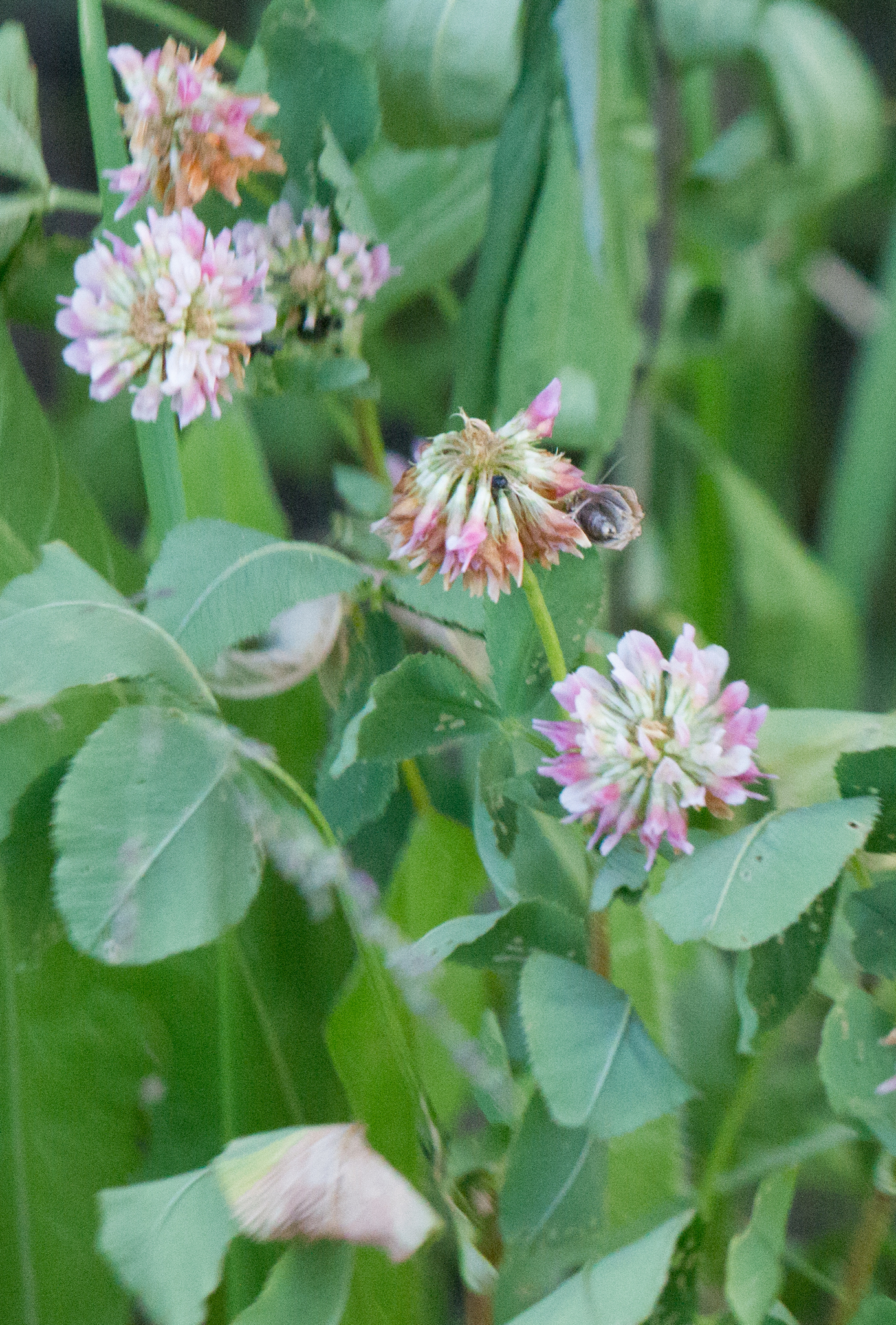
Alsike Clover
Alsike clover is a cool-season, short-lived perennial legume used in forage, cover and pollinator plantings. It is especially useful where wetter or moderately acidic soil conditions make other clovers more difficult to establish, and it can contribute flowering habitat and biological nitrogen fixation when properly inoculated and managed.
Clover Adapted to Moist & Challenging Soil Conditions
Alsike clover is often selected where moisture, drainage or soil reaction limits the fit of other clovers. It can provide forage, flowering habitat and legume diversity in suitable grass-based systems.
Moist-Soil Adaptation
Alsike clover is better adapted than many common clovers to poorly or moderately drained soils and sites that remain seasonally moist.
Acid-Soil Fit
It can establish under somewhat more acidic soil conditions than red clover, although fertility and soil testing still matter for productive stands.
Pollinator Resource
When allowed to flower, Alsike clover produces blossoms that can provide floral resources for bees and other pollinating insects.
Biological Nitrogen Fixation
As a legume, Alsike clover can fix atmospheric nitrogen when established with compatible rhizobia and effective root nodulation.
Grass-Legume Mixtures
It can be included with compatible grasses where a clover component is desired for forage diversity and legume contribution.
Cool-Season Growth
Alsike clover is most productive during cooler growing periods and can fit irrigated or moisture-supported cool-season forage systems.
Seeding Rate: A practical pure-stand reference is approximately 8–10 lb/acre. Lower rates are typically used when Alsike clover is included as one component of a grass-legume or multi-species mixture. Final rate should be adjusted for seed form, planting method, seedbed conditions and intended use.
A Useful Clover Where Moisture Limits Other Options
Alsike clover is most useful in cool-season systems where adequate moisture is available and the site has drainage or soil conditions that may be less favorable for other perennial clovers.
Establishment: Alsike clover seed is small. Plant shallow—around ¼ inch—into a firm seedbed with good seed-to-soil contact. Broadcast seed can be rolled or cultipacked after planting where appropriate. Maintain adequate surface moisture through germination and early establishment.
Inoculation: Use a compatible clover inoculant when needed to support effective nodulation and biological nitrogen fixation. Confirm the current seed form and inoculation status with Weaver Seed before planting.
Stand Management: Alsike clover is generally a short-lived perennial and should not be expected to persist indefinitely. Avoid severe, continuous defoliation and manage competing grasses so the clover has adequate light and recovery opportunity.
Horse Safety: Alsike clover should not be used in horse pasture or horse-hay plantings. Consumption by horses has been associated with photosensitization and serious liver-related toxicity. Select a different pasture legume for horse-use systems.
Other Livestock: As with other clovers, manage legume-rich pasture carefully because bloat risk can increase when animals consume a high proportion of lush clover. Alsike has also been associated with photosensitivity in some livestock. Review the intended livestock class and forage management before recommending a high-Alsike stand.